null G-5DLXE7JB0V

Your Cart

Your cart is empty

Continue shopping
Skip to main content
Probiotics, Stress, and Anxiety

Posted by - Beyond Health on Nov 3rd 2025

Probiotics, Stress, and Anxiety

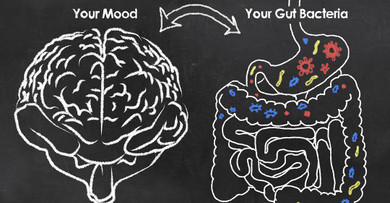
How Your Gut Bacteria Shape Stress, Anxiety, and Emotional Resilience Over the past two decades, research into the gut microbiome the roughly 3½–4 pounds of microscopic organisms living primarily in the colon has exploded. What scientists are discovering is profound: Your gut bacteria don’t just influence digestion they directly affect how you handle stress, anxiety, and emotional pressure. In the face of the COVID era and its ongoing uncertainties, stress resilience the ability to adapt, recover, and stay emotionally balanced has never been more important. At Beyond Health, we’ve long recommended classic stress-reduction practices such as meditation, exercise, time in nature, and restorative sleep. These are all valuable. But research now shows there’s another, often overlooked pillar of emotional resilience: A healthy population of beneficial bacteria in your gut. The Gut Brain Axis: A Two-Way Communication Highway There is a complex, bidirectional com…

read more
Dealing with Anxiety with Mental Imagery

Posted by -Beyond Health on Nov 3rd 2025

Dealing with Anxiety with Mental Imagery

Finding Calm Through Mental Imagery in an Anxiety-Filled World Mental imagery—the practice of allowing images or a subtle “felt sense” to arise from the subconscious—has been used across cultures and throughout human history as a way to access insight, wisdom, and healing. It has helped people solve problems, understand emotional patterns, and restore inner balance. I’d like to share a recent experience with mental imagery as an invitation for you to explore it yourself—especially in the context of our anxiety-laden COVID-19 world. It does take some time and patience to learn, but in my experience, the rewards can be profound. Entering the Inner Landscape To better understand a background feeling of anxiety that had been present since the start of the pandemic, I set a timer for 20 minutes and sat cross-legged on a cushion in my living room. With my eyes closed, I focused on my breath, allowing it to settle me into stillness and bring my awareness f…

read more
Protect Your Skin without Toxic Sunscreens

Nov 3rd 2025

Protect Your Skin without Toxic Sunscreens

Every summer we warn against using sunscreens. First, sunscreens contain toxic ingredients. Some are better than others, but we haven’t found a single one we’d want to use or recommend. Second, sunscreens are designed to block out the sun’s ultraviolet rays. This prevents sunburn, but it also blocks out many of the sun’s benefits. We’ve been sold a bill of goods on sunlight being dangerous. Sunlight is essential to our health and well-being. While too much sun can give you a sunburn, too much of anything can be harmful. Used intelligently, sunlight is nourishing and energizing. Our bodies convert the sun’s rays into vitamin D. Sunlight increases production of the “happy hormones” that prevent anxiety and depression, it enhances immunity, and increases the oxygen content in our blood. It helps to prevent and reverse cancer. Sunlight has even been shown to lower blood pressure, cholesterol and triglycerides, and to heal wounds and any number of skin diseases. So what is “intelli…

read more
Serotonin, Fish Oil and Your Brain

Posted by -Beyond Health on Nov 3rd 2025

Serotonin, Fish Oil and Your Brain

Omega-3s, Mood, and the Biochemistry of Depression Several years ago, Spanish researchers followed more than 12,000 European university graduates over a period of 6½ years, tracking diet and mental health outcomes. Their findings were striking: Diets high in trans fats increased depression risk by 50% Diets rich in fish oil were associated with a significantly lower risk of depression This wasn’t a subtle effect—and it points directly to the biochemical role of dietary fats in mental health. Why Omega-3 Deficiency Affects Mood Fish oil is a concentrated source of omega-3 fatty acids, particularly: EPA (eicosapentaenoic acid) DHA (docosahexaenoic acid) Deficiency in omega-3s has been linked to: Reduced stress resilience Increased anxiety and depression Hostility and aggression Impaired emotional regulation In one randomized controlled trial, medical students who supplemented with EPA/DHA experienced a 20% reduction in anxiety—despite being…

read more
Are You Deficient in Magnesium?

Nov 3rd 2025

Are You Deficient in Magnesium?

It’s Heart Month at Beyond Health. We recently wrote about magnesium and the heart—that magnesium is essential for a healthy heart, and that magnesium deficiency is often the real cause of cardiovascular problems such as high blood pressure, irregular heartbeat, and even heart attacks. Unfortunately magnesium deficiency is epidemic today! It has been estimated that 3/4 of the US population doesn’t consume the Recommended Dietary Allowance (RDA) for magnesium. So 75% of us may not even be getting enough magnesium in our diets to prevent severe deficiency disease, let alone achieve optimal health. But add to that the many factors that prevent full utilization of the magnesium we consume (see article below) and you’ve got a real problem that affects almost everyone. But how can you tell if you’re deficient? The blood test most doctors will give you won’t tell you very much.  The body does everything it can to keep blood levels consistent, and will keep pulling magnesium out…

read more
The Pause That Refreshes

Nov 3rd 2025

The Pause That Refreshes

Doing nothing is better than wasting time – Viktoras Kulvinskas Feelings of anxiety and stress have become an unavoidable aspect of life in this new COVID-19 era. Yet stress reduction is something we are advised to include in our antiviral lifestyle—a real Catch-22! But there are simple ways to reduce our stress overload, and they’re free and close at hand.  It just means making the time to include them in our lives.  What exactly is the problem with stress?  Well, for one thing it promotes the release of adrenal hormones that knock out immunity!  A good example of this is the increase in the number of colds college students get during exam time.  Stress can also activate latent viruses we usually carry around with us without a problem, as someone who experiences Herpes I and II outbreaks can attest.  Stress can also interfere with sleep—so important for strong immunity, and it can nudge us into unhealthy habits like overeating, eating the…

read more
Roberto Assagioli’s Exercise for Evoking Serenity

Nov 3rd 2025

Roberto Assagioli’s Exercise for Evoking Serenity

Roberto Assagioli MD was an Italian psychoanalysis who was a contemporary and student of Sigmund Freud and Carl Jung.  But he was also deeply influenced by his mother, a serious student of Eastern religion.  He wound up combining Western science with Eastern spirituality in a new type of psychotherapy called psychosynthesis.  But more than his credentials, Roberto, as he was known, exhibited a calm sense of joyfulness and kindness that was quite independent of external events.  People reported feeling happy just being around him. So he can be considered an expert on the subject of serenity. In this anxious COVID-19 time, we might benefit from the following exercise he advocated for cultivating serenity, copied from his book, Psychosynthesis: EXERCISE FOR EVOKING SERENITY Assume a physical attitude of serenity: relax all muscular and nervous tension; breathe slowly and rhythmically; express serenity on your face with a smile.  (You can hel…

read more
Setting Healthy Boundaries with Tech Devices

Nov 3rd 2025

Setting Healthy Boundaries with Tech Devices

"Getting and spending, we lay waste our powers; Little we see in Nature that is ours"  – William Wordsworth, from his poem “The World is Too Much With Us”The English poet William Wordsworth wrote these lines around 1802 at the time of the first industrial revolution, when he felt himself and the people around him to be out of tune with nature. If “the world”—the worldly world of making money so we can spend it to buy more things—was too much with him in 1802, what would Wordsworth have thought about life in the 21st century?Not only are we immersed in overwork and commercialism, but we choose to spend a good part of our discretionary time glued to mobile phones, smartphones, computers and TVs. A 2018 Nielson report found the average US adult spends 11 hours a day listening, watching, reading or interacting with electronic media.Studies have shown that heavy tech use can be addictive, and that it increases stress and anxiety levels, interferes with sleep, and fosters depressi…

read more
Shinrin-yoku (Forest Bathing)

Nov 3rd 2025

Shinrin-yoku (Forest Bathing)

Years ago we heard an intriguing story. A frail, elderly gentleman in India, bent over with age, left his village to wander into the woods to die. Several years later he returned, vigorous, upright and tanned from the sun, claiming he had been rejuvenated by communing with the rocks, the trees, and the mountain streams.This story came out of Asia’s ancient tradition of nature therapy recently revived in Japan under the name of shinrin-yoku, or “forest bathing.” Forest bathing is immersing yourself in a forest environment. This means leaving your cell phone and daily concerns behind and spending several hours deep in the woods, walking on trails or sitting with no other purpose than to experience your surroundings through all five senses: smelling the woodsy air; feeling the ground beneath your feet or the bark of a tree or the texture of a leaf; tasting a blackberry or wild mint; listening to bird calls and the sound of the wind rustling through the trees; and taking in the varied si…

read more
Want Energy? Get Enough Vitamin Zzzzzs!

Nov 3rd 2025

Want Energy? Get Enough Vitamin Zzzzzs!

You never feel like you have enough time. Your day seems like it just doesn't have enough hours, or you're too tired to tackle everything on your list. However, rather than attempt to speed up your pace or try another time management technique, consider addressing your sleep - specifically if and how much restorative sleep you're getting in each night. What Is Restorative Sleep?To operate at top energy and efficiency, getting a good night's sleep - seven to nine hours of "restorative sleep" that leaves you waking up feeling rested and refreshed - is essential.The body is self-healing, self-repairing and self-detoxifying - but only if it gets enough rest and sleep, because all this healing, repairing and detoxifying work is done when the body is at rest.To put it straightforwardly, when you wake up feeling alert, rested and ready to start your day, you've had a night of restorative sleep. Restorative sleep applies to the period lasting from deep sleep and rapid eye movement (REM), durin…

read more
Master Self-Soothing: Body, Feelings and Mind Techniques

Nov 3rd 2025

Master Self-Soothing: Body, Feelings and Mind Techniques

The new COVID-19 world is a world beset by fear. Unseen viral particles can be lurking anywhere. Should one find us, we don’t know for sure how we would respond. And with social patterns dramatically altered and the economy collapsing, we are losing our sense of comfort, safety and being in control, leading to a stressful sense of chronic uncertainty and anxiety. We know from many scientific studies that stress negatively affects health. But although there may be little we can do to avoid stress in a COVID-19 world, we can use self-care to decrease and minimize the negative effects of stressful feelings. For example, you can pray or meditate.  Or you can simply bring calm and non-judgmental attention to how you’re feeling.      We’ve talked before about a helpful exercise called Body-Feelings-Mind. In this exercise, you find a comfortable position in a quiet place and, with eyes closed, check in with how you’re feeling, first ph…

read more

Categories

Tags

Disclaimer

Information contained in NewsClips articles should not be construed as personal medical advice or instruction. These statements have not been evaluated by the Food and Drug Administration. Products are not intended to diagnose, treat, cure or prevent any disease.