
What Is Mobility?
What Is Mobility, and Why Does It Matter?
Mobility is your ability to move your joints freely and control your body through a functional range of motion. It plays a role in nearly everything you do, from walking and climbing stairs to exercising, reaching overhead, and getting up from the floor.
Mobility and flexibility are often confused, but they are different.
Flexibility is how far a muscle or group of muscles can lengthen.
Mobility is your ability to actively move through a range of motion with control, strength, and stability.
For example, you may have enough flexibility to pull your knee toward your chest while lying down. But performing a controlled squat requires your hips, knees, and ankles to move together while your muscles maintain strength and stability.
As we age, maintaining that combination of movement and control becomes increasingly important. Good mobility helps you continue performing everyday activities comfortably while supporting an active, independent lifestyle.
Key takeaway: Mobility = Range of Motion + Strength + Control
Why Mobility Becomes More Important With Age
Mobility can change as you get older, but age alone does not determine how well you move. Your activity level, strength, balance, previous injuries, and daily habits all play a role.
One of the biggest concerns is the gradual loss of muscle mass, strength, and physical function. When strength declines, everyday movements such as getting out of a chair, climbing stairs, carrying groceries, or getting down to the floor can become more difficult.
Changes in balance, gait, and physical strength can also affect mobility as we age. Maintaining these abilities matters because mobility is closely connected to your ability to continue living and functioning independently.
The good news is that decline is not something you simply have to accept. Regular physical activity can help preserve physical function and independence as you age. The National Institute on Aging recommends a combination of aerobic activity, strength training, and balance work for older adults.
What Can Affect Mobility as You Age?
- Loss of muscle and strength: Less strength can make normal movements more demanding.
- Reduced activity: Moving less can make it harder to maintain physical capacity.
- Changes in balance: Balance becomes increasingly important for confident movement and fall prevention.
- Joint stiffness: Reduced movement can make comfortable ranges of motion harder to maintain.
- Long periods of sitting: A sedentary lifestyle means fewer opportunities to use your body's available range of motion.
The goal isn't simply to become more flexible. You want to maintain the strength, balance, and movement capacity needed to keep doing the things you enjoy.
Health Benefits of Exercise and Physical Activity | National Institute on Aging
Key takeaway: Staying active is one of the most important things you can do to protect your physical function as you age.
The Mobility, Strength, and Muscle Connection
Mobility and strength work together. Having a large range of motion is less useful if your muscles cannot control and support your body throughout that movement.
Think about performing a squat. Your hips, knees, and ankles need enough mobility to move through the exercise comfortably. At the same time, your muscles need enough strength to control your body on the way down and bring you back up.
This same relationship affects many of the movements you perform every day.
- Getting up from the floor requires mobility, coordination, and lower-body strength.
- Climbing stairs requires your hips, knees, and ankles to move while your muscles support your body weight.
- Reaching overhead requires adequate shoulder and upper-back mobility combined with muscular control.
- Carrying groceries requires grip strength, core stability, and the ability to move comfortably under additional weight.
- Getting out of a chair requires adequate hip and knee movement along with lower-body strength.
This is why stretching alone isn't enough. The goal is to develop usable mobility, meaning you have both the range of motion and the strength to control it.
Strength becomes particularly important as you age. Adults should perform muscle-strengthening activities at least two days each week, according to current CDC physical activity recommendations.
Key takeaway: Don't focus only on becoming more flexible. Build strength throughout the ranges of motion you want to maintain.
About Physical Activity | Physical Activity | CDC
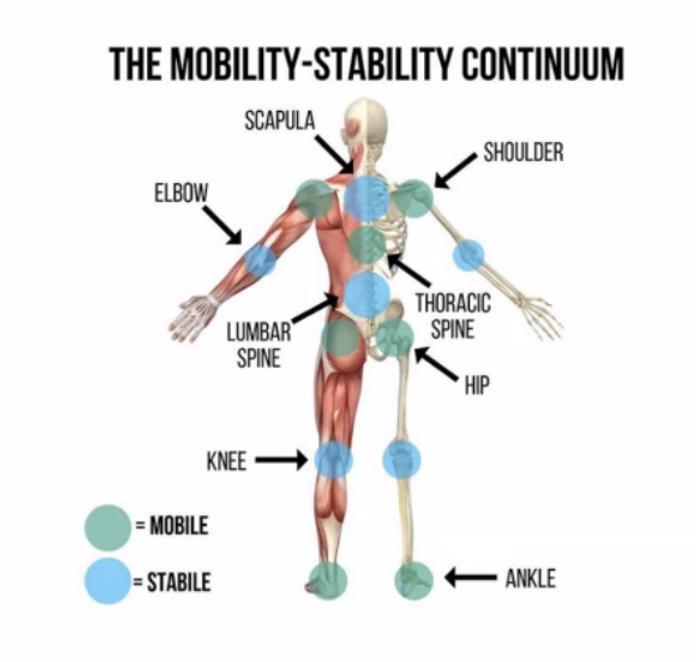
Five Areas of Your Body Worth Protecting
Good mobility depends on your entire body working together, but several areas have an especially large impact on how comfortably and confidently you move.
Hips
Your hips play a major role in walking, squatting, bending, climbing stairs, and getting up from a chair. Maintaining hip mobility can help you continue performing these everyday movements through a comfortable range of motion.
Ankles
Ankle mobility affects much more than your feet. Your ankles contribute to walking, balance, squatting, and navigating stairs or uneven surfaces. Limited ankle movement can also change how you perform movements involving your knees and hips.
Shoulders
Healthy shoulder movement allows you to reach overhead, lift objects, exercise, get dressed, and perform everyday tasks without unnecessary restriction. Shoulder mobility also relies on movement and control from the surrounding muscles.
Thoracic Spine
The thoracic spine is the middle and upper portion of your back. It plays an important role in posture, rotation, and upper-body movement. Maintaining movement in this area can make reaching, turning, and many upper-body exercises easier to perform.
Knees
Your knees handle significant demands during walking, climbing stairs, sitting, standing, and exercising. Strong muscles surrounding the knees, combined with adequate movement at the hips and ankles, help support comfortable everyday movement.
Key takeaway: Mobility isn't about one joint. Your hips, ankles, shoulders, spine, and knees work together to help you move efficiently and maintain your independence.
Exercise and physical activity | National Institute on Aging
A Simple Daily Mobility Routine
You don't need an hour-long mobility session to work on how your body moves. A short, consistent routine can help you regularly move your major joints through comfortable ranges of motion.
Try adding these movements to your morning routine, before a workout, or after you've been sitting for a long period.
Ankle Rocks
Perform 10 controlled repetitions on each side. Keep your heel on the ground while gently driving your knee forward over your toes. This moves the ankle through dorsiflexion, which is important for movements such as walking and squatting.
Hip Flexor Stretch
Hold for about 30 seconds on each side. Keep your torso upright and gently shift your hips forward until you feel a comfortable stretch through the front of your hip.
Controlled Bodyweight Squats
Perform 8 to 10 repetitions through a comfortable range of motion. Focus on staying controlled rather than trying to squat as deeply as possible.
Thoracic Rotations
Perform 8 repetitions on each side. Rotate through your upper back while keeping the movement slow and controlled. This helps you regularly move your thoracic spine through rotation.
Wall Slides
Perform 8 to 10 repetitions. Keep the movement controlled as you raise and lower your arms. This provides a simple way to work on shoulder and upper-back movement.
Sit-to-Stand
Perform 10 repetitions from a stable chair. Stand completely, then lower yourself back down under control. This combines mobility, balance, coordination, and lower-body strength in a movement you use every day.
Consistency matters more than forcing greater range of motion. Never push through sharp pain just to complete a stretch or exercise. If you have an injury, significant pain, balance problems, or medical restrictions, talk with an appropriate healthcare professional before beginning a new exercise routine.
Key takeaway: Five to ten minutes of intentional movement each day can give you a simple way to regularly practice the movements and ranges of motion you want to maintain.
Mobile Technology for Adaptive Aging (2020) | National Institute on Aging
Don’t Forget Strength Training
Mobility gives you access to movement, but strength helps you control and use that movement. If you want to stay capable as you age, mobility work and resistance training should work together.
Strength training helps maintain muscle strength, balance, physical function, and the ability to perform everyday activities. This becomes increasingly important with age as muscle mass and strength can gradually decline.
You don't need to train like a competitive athlete. Focus on basic movement patterns that translate into everyday life.
Squat or Sit-to-Stand
Squats strengthen the muscles used to stand up, sit down, climb stairs, and get off the floor. If traditional squats are difficult, repeatedly standing from a sturdy chair is a practical starting point.
Hip Hinge
Hip-hinge movements train your glutes, hamstrings, hips, and back while teaching you to bend and lift with control. Deadlift variations are one example, but the movement can also be practiced with very light resistance.
Push and Pull
Pushing and pulling exercises help maintain upper-body strength and shoulder function. Rows, resistance-band pulls, wall push-ups, and presses can all be adjusted to your ability level.
Carry
Carrying an appropriate weight while walking trains grip strength, core stability, posture, and balance at the same time. It also closely resembles everyday activities such as carrying groceries or luggage.
Walk
Don't underestimate walking. Regular walking supports cardiovascular fitness while keeping your hips, knees, and ankles moving. Increasing your pace, distance, or terrain can make walking progressively more challenging.
Adults should generally aim for at least 150 minutes of moderate-intensity aerobic activity each week and muscle-strengthening activity on two or more days per week, according to CDC recommendations.
Key takeaway: Mobility and strength shouldn't compete for your attention. Maintaining both gives your body the movement and physical capacity needed to stay active as you age.
About Physical Activity | Physical Activity | CDC
Nutrition’s Role in Staying Active
Movement and strength depend on more than exercise. Your body also needs adequate nutrition to maintain muscles, bones, connective tissue, and normal energy production.
A balanced diet should provide the foundation. As you age, paying attention to specific nutrients can become especially important for supporting an active lifestyle.
Protein
Protein provides the amino acids your body uses to build and maintain muscle tissue. Getting enough protein becomes especially important when combined with regular resistance training and physical activity.
Good sources include eggs, fish, poultry, meat, dairy products, beans, and other protein-rich foods.
Boost Your Workout with Chocolate Protein Powder - Natural Muscle Builder 2 lbs.
Magnesium
Magnesium is involved in hundreds of processes throughout the body and contributes to normal muscle function, nerve function, and energy production.
For active adults, getting adequate magnesium helps provide the nutritional foundation your muscles need to function normally.
Magnesium Supplement for Nerves, Muscles & Energy (2025)
Vitamin D
Vitamin D is best known for its role in bone health, but it also contributes to normal muscle function and calcium absorption.
Maintaining adequate vitamin D becomes particularly important as you age because strong bones and functioning muscles both contribute to staying physically active.
Boost Your Health with Vitamin D3 Supplement – 5000 IU
Vitamin C
Vitamin C does much more than support immune function. Your body requires vitamin C for normal collagen formation, making it relevant to connective tissues such as cartilage, bones, and skin.
Vitamin C also functions as an antioxidant and helps protect cells from oxidative stress.
Boost Immunity with Vitamin C Buffered Tablets – 250 Count
Omega-3 Fatty Acids
Omega-3 fatty acids, particularly EPA and DHA, are important components of a well-rounded nutritional approach. Fatty fish such as salmon, sardines, and mackerel are major dietary sources.
If your diet doesn't regularly include fatty fish, an omega-3 supplement can provide another source of EPA and DHA.
Fish Oil Supplements | Omega-3 fish oil | Beyond Health
Key takeaway: Exercise provides the stimulus, while good nutrition provides your body with the raw materials it needs to maintain normal muscles, bones, and connective tissues.
Healthy Eating As You Age: Know Your Food Groups | National Institute on Aging
Mobility Is Built Through Daily Habits
A mobility routine can help, but what you do during the rest of your day matters too. Your body adapts to how you use it. If most of your day is spent sitting in the same position, a few minutes of stretching won't address the bigger issue.
The goal is to give your body regular opportunities to move throughout the day.
Break Up Long Periods of Sitting
If you work at a desk or spend hours sitting, stand up and move periodically throughout the day. Walk around, change positions, or perform a few simple movements.
You don't need to turn every break into a workout. The point is simply to avoid spending hours in one position.
Use Your Full Range of Motion
Daily life can become surprisingly repetitive. We sit in chairs, walk on flat surfaces, and rarely reach, squat, rotate, or get down to the floor.
Look for opportunities to regularly use the ranges of motion you want to keep.
That might mean squatting to pick something up, reaching overhead, taking the stairs, gardening, hiking, or simply getting down to the floor and back up.
Keep Walking
Walking is one of the simplest ways to keep your body moving consistently. It involves your ankles, knees, hips, and trunk while also supporting cardiovascular fitness.
Walking on hills or varied terrain can introduce additional movement and balance demands.
Stay Consistent
You don't need perfect mobility.
You need enough strength, balance, coordination, and range of motion to comfortably do the things that matter to you.
A 10-minute mobility routine performed consistently is more useful than an intense hour-long session you rarely repeat.
Key takeaway: Your mobility is influenced by how you use your body every day. Move often, use different ranges of motion, stay strong, and make physical activity part of your normal routine.
The Real Goal Is Staying Independent
The real purpose of maintaining mobility isn't to become more flexible. It's to preserve your ability to do the things you want to do.
Think about the movements that make up everyday life. Getting out of bed. Walking up stairs. Carrying groceries. Playing with your grandchildren. Traveling. Hiking. Exercising. Working around the house. Getting down on the floor and standing back up.
Strength, balance, and mobility help make those activities possible.
As you get older, maintaining physical function can become increasingly important. Regular movement, resistance training, good nutrition, and consistent daily habits can all contribute to maintaining an active lifestyle.
You also don't need perfect mobility in every joint. The goal is to maintain enough comfortable, controlled movement to continue living the life you want to live.
That makes mobility something worth working on before it becomes a limitation.
Keep Moving for the Long Term
Start with what you can do today.
Move regularly. Build and maintain muscle. Challenge your balance. Eat well. Recover properly. And keep using your body.
Small habits practiced consistently can help you maintain the physical capacity needed for an active life.
Key takeaway: Healthy aging isn't simply about adding years to your life. It's about maintaining the physical ability to enjoy those years.
Beyond Health: Premium Vitamins & Supplements