Weight, Inflammation & Your Gut: How They're Connected After 40
If the scale got harder to move after 40, it isn't just willpower. Weight, inflammation and gut health are tightly linked, and when one slips, the other two tend to follow.
Beyond Health founder Raymond Francis taught that there is really one disease, malfunctioning cells, with two causes: deficiency and toxicity. Stubborn weight is a good example. Chronic inflammation, an unbalanced gut and missing nutrients all make it harder for your cells to burn fuel the way they should.
This guide walks through each piece: what inflammation does to your weight, how your gut fits in, and how to lose weight after 40 without losing muscle. At the end is a simple daily plan you can start this week.
1. Inflammation and weight: what's happening inside
Short-term inflammation is good. It's how your body heals a cut or fights off a cold. The problem is low-grade inflammation that never shuts off. You can't feel it, but over months and years it changes how your body handles food and stores fat.
- Fat feeds inflammation. Fat tissue, especially around the belly, releases inflammatory signals into the bloodstream. More fat means more inflammation.
- Inflammation makes fat easier to store. Researchers have found that obesity-related inflammation helps drive insulin resistance (McArdle et al., 2013). When your cells stop responding to insulin, blood sugar stays higher and more of what you eat gets stored as fat.
The result is a loop: more fat, more inflammation, harder to lose the fat. The good news is that the loop runs the other way, too. In the large POUNDS Lost trial, weight loss lowered a key inflammation marker (hsCRP) no matter which diet people followed (Nicklas et al., 2013).
What helps: sleep, regular movement, fewer processed foods and sugars, more vegetables and colorful plants, and key nutrients that support a healthy inflammatory response:
- Curcumin Formula: the active compound in turmeric. A review of clinical trials found curcumin lowered CRP, a common inflammation marker, with larger effects in adults over 45 (umbrella meta-analysis, 2023).
- Fish Oil (Omega-3 EPA/DHA): omega-3s help balance the omega-6 fats that dominate the modern diet.
- Glutathione Formula: your body's master antioxidant, which helps protect cells from the oxidative stress that goes hand in hand with inflammation.
2. The gut connection
Your gut is home to trillions of bacteria, and they do far more than help you digest. They help regulate appetite, blood sugar and inflammation, which means they have a say in your weight (Boscaini et al., Molecular Metabolism, 2022).
- Gut bacteria help control appetite. Compounds made by healthy gut bacteria can boost your body's own fullness hormones, including GLP-1 and PYY.
- An unhealthy gut fuels inflammation. High-fat, highly processed diets are linked to bacterial byproducts leaking into the bloodstream, which triggers more inflammation. This is one of the main ways gut health and inflammation are tied together.
- Your gut bacteria affect blood sugar. Different people's blood sugar responds differently to the same meal, and gut bacteria are part of the reason.
Aging, stress, antibiotics, alcohol and a low-fiber, high-sugar diet all tip the balance the wrong way. An estimated 95% of Americans don't get the recommended amount of fiber (Quagliani & Felt-Gunderson, 2017), and fiber is what your good gut bacteria feed on.
What helps: eat more fiber from vegetables, beans, berries and whole foods. Add fermented foods like sauerkraut or plain yogurt if you tolerate them. Cut back on sugar and highly processed foods, which feed the wrong bacteria.
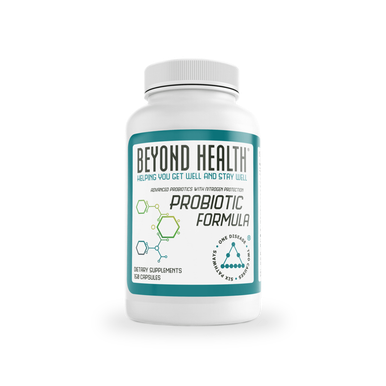
- Probiotic Supplement: supports a balanced microbiome and healthy digestion.
- Multivitamin for Men & Women: fills the nutrient gaps that come with eating less or eating poorly, so your body has what it needs.
3. Losing weight after 40, and why muscle matters
After 40, the goal isn't just a lower number on the scale. It's losing fat while keeping muscle. After age 30, men can lose as much as 3% to 5% of their muscle mass per decade (Harvard Health Publishing). Muscle is one of your body's biggest users of blood sugar and calories, so losing it slows your metabolism and makes weight easier to regain.
This matters even more if you're among the millions of people now taking a GLP-1 medication like Ozempic, Wegovy or Zepbound. These drugs sharply reduce appetite, and body scans in the STEP 1 trial showed people lost lean mass as well as fat (Wilding et al., STEP 1 body composition analysis). Eating much less also makes it easy to fall short on protein, vitamins and minerals.
Whether you're on a GLP-1 or not, three things protect your muscle and your progress:
- Get enough protein. Aim for protein at every meal. Many older adults need more than they think to hold on to muscle.
- Lift something. Strength training two to three times a week, even with bands or body weight, tells your body to keep its muscle.
- Keep blood sugar steady. Big blood sugar swings drive cravings and fat storage. Fiber, protein and fewer refined carbs all help.
Nutrients that support each step:
- Chocolate Protein Powder: an easy way to hit your protein goal, and protein helps you feel full longer.
- Creatine Powder: in older adults, creatine taken alongside strength training improves gains in lean mass and strength (Forbes et al., Nutrients, 2021).
- Natural Amino HGH Support: an amino acid blend that supports recovery and muscle.
- Berberine 500mg: a plant compound that supports healthy blood sugar and metabolism. In a review of clinical trials in people with type 2 diabetes, berberine improved blood sugar markers and lowered BMI (2021 meta-analysis).
- Glucose Support: a blend formulated to support healthy blood sugar levels.

4. A simple daily plan
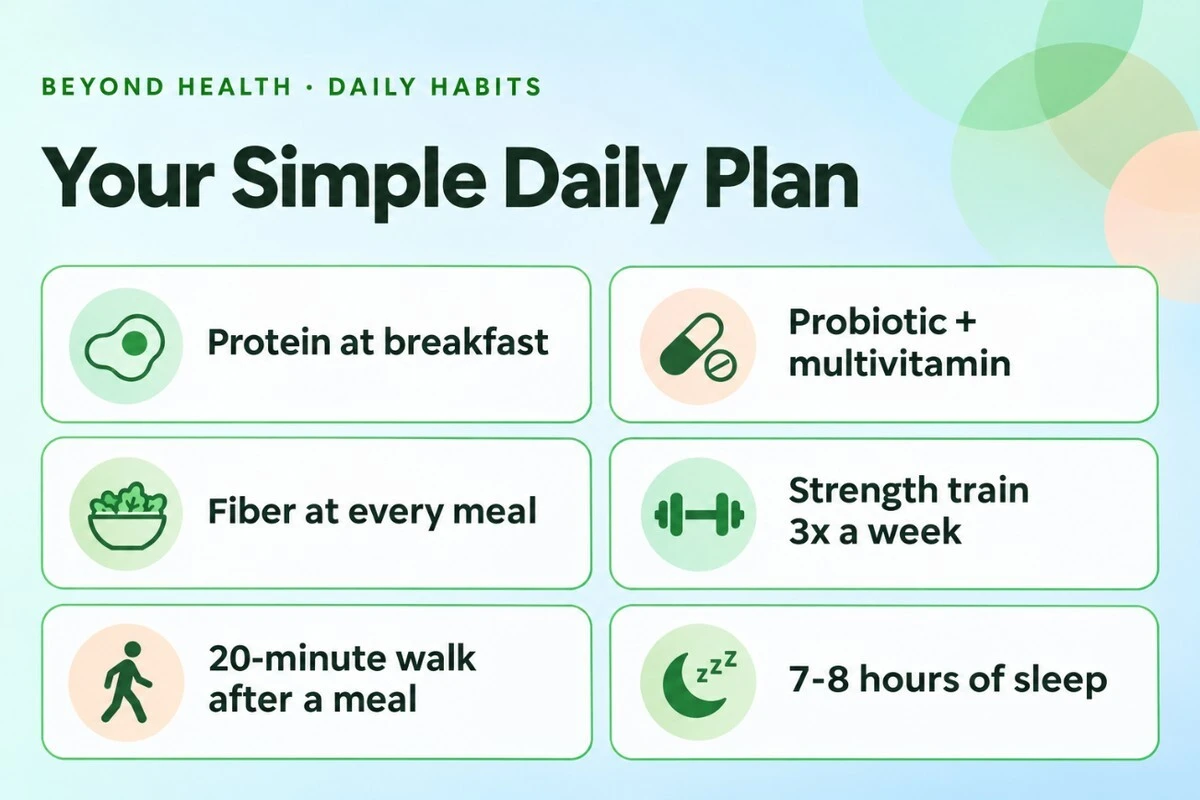
You don't need to overhaul everything at once. Start with these, and add one habit each week.
| When | Habit | Supports |
|---|---|---|
| Morning | Protein-rich breakfast; a scoop of protein powder counts | Muscle, fullness |
| Morning | Multivitamin and probiotic | Nutrient gaps, gut |
| With meals | Half your plate vegetables; fiber at every meal | Gut, blood sugar |
| With meals | Curcumin and fish oil with your largest meal | Healthy inflammatory response |
| Before meals | Berberine, as directed on the label | Blood sugar, metabolism |
| 3 days a week | 20 to 30 minutes of strength training; creatine on those days or daily | Muscle |
| Daily | A 20-minute walk, ideally after a meal | Blood sugar, inflammation |
| Evening | Cut off sugar and alcohol; aim for 7 to 8 hours of sleep | All three |
Small, steady changes beat a crash diet. Cool the inflammation, feed your gut, protect your muscle, and the weight becomes easier to manage.
Sources
- McArdle et al., Mechanisms of Obesity-Induced Inflammation and Insulin Resistance, Frontiers in Endocrinology (2013)
- Nicklas et al., Effect of Dietary Composition of Weight Loss Diets on High Sensitivity C-Reactive Protein: The POUNDS Lost Trial, Obesity (2013)
- Profiling Inflammatory Biomarkers following Curcumin Supplementation: An Umbrella Meta-Analysis of Randomized Clinical Trials (2023)
- Boscaini et al., Microbiota and Body Weight Control: Weight Watchers Within?, Molecular Metabolism (2022)
- Quagliani & Felt-Gunderson, Closing America's Fiber Intake Gap, American Journal of Lifestyle Medicine (2017)
- Harvard Health Publishing, Declining muscle mass is part of aging, but not inevitable (2016)
- Wilding et al., Impact of Semaglutide on Body Composition in Adults With Overweight or Obesity: Exploratory Analysis of the STEP 1 Study, Journal of the Endocrine Society (2021)
- Forbes et al., Meta-Analysis Examining the Importance of Creatine Ingestion Strategies on Lean Tissue Mass and Strength in Older Adults, Nutrients (2021)
- The Effect of Berberine on Metabolic Profiles in Type 2 Diabetic Patients: A Systematic Review and Meta-Analysis, Oxidative Medicine and Cellular Longevity (2021)
These statements have not been evaluated by the Food and Drug Administration. These products are not intended to diagnose, treat, cure, or prevent any disease. Talk with your doctor before starting a new supplement, especially if you take prescription medications such as a GLP-1, diabetes medication, statins or blood thinners.