Getting older is inevitable. Becoming weak doesn't have to be.
When people think about healthy aging, nutrition, heart health, sleep, and maintaining a healthy weight often come to mind. But there's another important part of the equation that deserves attention: maintaining muscle and strength.
Strength affects far more than what you can lift in the gym. It helps you climb stairs, carry groceries, get up from a chair, work around the house, enjoy outdoor activities, travel, and continue doing the things you love.
That's why building and maintaining strength can be an important part of a healthy lifestyle as you age.
We Naturally Lose Muscle as We Get Older
Muscle mass and strength tend to decline with age, particularly later in adulthood. This age-related loss of muscle is commonly referred to as sarcopenia.
The good news is that resistance exercise can help counteract some of these age-related changes.
You also don't have to train like a bodybuilder to benefit.
Resistance training can include:
- Free weights
- Weight machines
- Resistance bands
- Bodyweight exercises
- Other exercises that challenge your muscles against resistance
The key is providing your muscles with an appropriate challenge and gradually progressing over time.
Strength Is About More Than Muscle
Building and maintaining muscle may be the most obvious reason to strength train, but the benefits extend beyond muscle size.
1. Everyday Activities Become Easier
Think about how often you use strength without realizing it.
Getting out of a chair. Carrying groceries. Picking something up from the floor. Moving furniture. Climbing stairs. Playing with your children or grandchildren.
Maintaining strength helps preserve your ability to perform everyday tasks.
2. Strong Muscles Support Movement and Balance
Strength, coordination, and balance all contribute to how confidently you move.
Training the legs, hips, core, and upper body can help build the physical capacity needed for everyday movement.
3. Resistance Training Challenges Your Bones Too
Muscles aren't the only tissues that respond to exercise.
Weight-bearing and resistance exercises place mechanical stress on the skeletal system, which is one reason resistance exercise is commonly recommended as part of a lifestyle that supports bone health.
4. Muscle Plays an Important Metabolic Role
Skeletal muscle is metabolically active tissue and plays an important role in glucose metabolism and overall metabolic health.
That makes maintaining muscle relevant not only to physical performance, but also to broader health as we age.
You Don't Need a Complicated Workout
One of the biggest mistakes people make is assuming exercise needs to be complicated to work.
A good strength routine can be built around a handful of fundamental movement patterns.
Squat
Think sitting down and standing back up.
Exercises might include bodyweight squats, goblet squats, or variations of the leg press.
Hinge
Think bending at the hips to pick something up.
Deadlift variations and Romanian deadlifts are common examples.
Push
Pushing something away from your body.
Push-ups, chest presses, and overhead presses fit here.
Pull
Pulling something toward your body.
Rows and pulldowns are common examples.
Carry
Picking something up and moving with it.
Loaded carries can challenge your grip, core, legs, and upper body simultaneously.
You don't necessarily need dozens of different exercises. Learning fundamental movements and becoming progressively stronger at them can go a long way.
Benefits of Physical Activity | Physical Activity Basics | CDC
How Often Should You Strength Train?
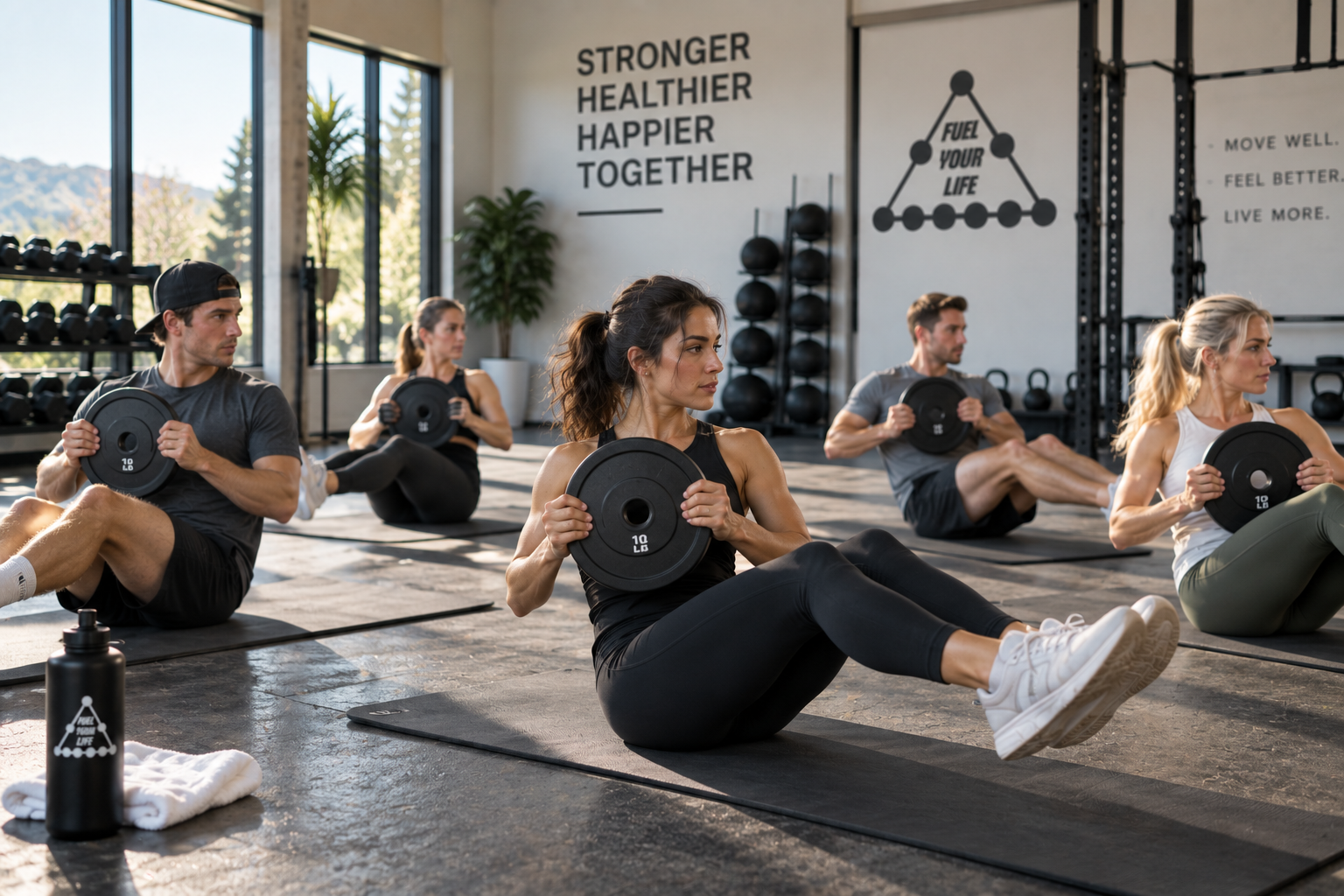
For general health, the current Physical Activity Guidelines for Americans recommend that adults perform muscle-strengthening activities involving all major muscle groups on at least two days per week.
That doesn't mean everyone needs the same routine.
Your appropriate training frequency depends on your experience, goals, health, schedule, and ability to recover.
For someone just getting started, consistency matters more than trying to create the "perfect" workout.
Two manageable workouts you consistently complete are more useful than an ambitious five-day routine you abandon after two weeks.
Don't Forget About Progression
Your body adapts.
An exercise that is challenging today may become relatively easy after you've performed it consistently.
That's where progressive overload comes in.
Over time, you might gradually:
Increase the weight.
Perform another repetition.
Improve your technique.
Increase your range of motion.
Add another set.
Progress to a more challenging variation.
Progress doesn't need to happen every workout. The larger goal is to gradually challenge your body as your capabilities improve.
Three Types of Exercise Can Improve Your Health and Physical Ability | National Institute on Aging
Nutrition Matters Too
Exercise provides the stimulus, but your body also needs the nutritional building blocks to recover and maintain tissue.
Protein is especially important because it supplies amino acids used to build and maintain muscle proteins.
A balanced diet should also provide adequate energy, vitamins, minerals, healthy fats, carbohydrates, and fluids.
Supplements can help fill specific nutritional gaps when appropriate, but they shouldn't replace the fundamentals of a nutritious diet.
Training and nutrition work together.
Recovery Is Part of Training
More exercise isn't automatically better.
Your body needs time to recover from training.
Sleep, adequate nutrition, hydration, stress management, and appropriate rest between workouts all contribute to recovery.
If you're constantly exhausted, excessively sore, or experiencing persistent pain, simply adding more exercise may not be the answer.
A sustainable approach should challenge your body while still allowing it to recover.
Start Where You Are
You don't need to be young, athletic, or experienced in a gym to begin working on your strength.
Start at an appropriate level and focus on gradually improving.
If you've been inactive for a long time, have an injury, or have a medical condition that could affect exercise, talk with an appropriate healthcare professional before beginning a new exercise program.
Most importantly, don't compare your starting point to someone else's.
The goal is to become stronger and more capable than you were before.
Strength Is an Investment in Your Future
It's easy to think of exercise in terms of what it does for you today.
But strength training can also be viewed as an investment in the person you want to be years from now.
You want to keep traveling.
Keep hiking.
Keep playing with your family.
Keep carrying your own groceries.
Keep getting up off the floor.
Keep doing the activities that make life enjoyable.
That's what strength is ultimately about.
Stay Strong. Stay Capable.
At Beyond Health, we believe health involves more than any single supplement, workout, or diet.
How you move, how you eat, how you recover, and what you consistently do each day all matter.
Take care of your body today so it can continue taking you where you want to go tomorrow.
Fuel Your Life.