null G-5DLXE7JB0V

Your Cart

Your cart is empty

Continue shopping
Skip to main content
Curcumin and a Drug-Free Approach to Arthritis

Nov 3rd 2025

Curcumin and a Drug-Free Approach to Arthritis

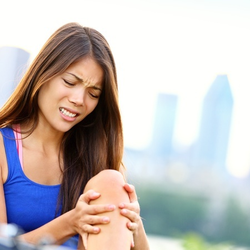
The secret to erasing arthritic pain is reducing inflammation. This is because inflammation does two things: it produces the swelling and sensitivity that causes pain, and it releases chemicals that break down protective cartilage around your joints, which causes even more pain over time. So if you can reduce inflammation, you can both alleviate pain and disability now AND prevent further deterioration of your joints.  Anti-inflammatory drugs like Advil and Tylenol are generally recommended for this purpose, however every one of them has serious harmful side effects, one of them being long-term destruction of joint cartilage ! As the drugs cause your joints to continue to deteriorate, you will of course need more and more of the drug to manage your pain, and this will cause even more deterioration. The good news is that it’s possible to live a pain-free life even with advanced osteoarthritis! In fact, patients with no cartilage left to cushion one or m…

read more

Nov 3rd 2025

Vitamin D2 versus Vitamin D3

. . . What's the difference? If you get the 25(OH)D test for vitamin D status that we urge everyone to get, you’re likely to find you’re deficient. It’s also likely your doctor will offer you a prescription for Drisdol, a synthetic form of vitamin D. Thank your doctor, but call us rather than fill that prescription. Drisdol is vitamin D2, a form of vitamin D that is less effective than vitamin D3 (the form of vitamin D we carry) and may even be harmful. There are two basic forms of vitamin D – vitamin D2 and vitamin D3. D3 (cholecalciferol) is the preferred form. It’s what’s made in our skin from sunlight; it’s also found in eggs, organ meats, animal fat and fish oil. Vitamin D2 (ergocalciferol) is synthesized by irradiating yeast or fungi. It isn’t generally found in the human body. Because it’s easier and less expensive to manufacture, D2 is the form most often used for food fortification and in medications. But it’s more di…

read more
30 Years of Compelling Science Documents Curcumin’s Remarkable Health-Promoting Abilities

Nov 3rd 2025

30 Years of Compelling Science Documents Curcumin’s Remarkable Health-Promoting Abilities

Researched extensively since the 1990s, more than 120 clinical trials and thousands of research papers have focused on curcumin’s remarkable health benefits. What is curcumin?  Curcumin is the principal active ingredient of turmeric, the spice that gives Indian curries their golden color. In India, turmeric is revered as “holy powder,” and it has played a major role in traditional Ayurvedic (Indian) medicine for centuries. Curcumin is now being studied in search of possible remedies for some of the major epidemics of our time. Curcumin beneficially affects the expression of more than 700 genes and influences numerous biochemical pathways at the same time. Its unique and powerful antioxidant and anti-inflammatory effects make it extraordinarily beneficial for every system in the body.  Arthritis and any other "itis."  If you've got any of the "itis" diseases, your symptoms are caused by chronic inflammation. Studies have shown that curc…

read more
The Truth About Curcumin Products

Nov 3rd 2025

The Truth About Curcumin Products

As studies on its remarkable benefits continue to accumulate, supplemental curcumin is becoming increasingly popular, with a host of different products and formulations, at a wide range of prices, each claiming to be the best.  As a consumer, how can you evaluate the different products out there?  There are certain things you can look for on a product label, but all too often the information you really need isn’t on the label, and sometimes what’s on the label isn’t even in the product!  For example, a report from Consumer Lab, which tests various supplements and makes this information known to the public, found that 20% of the turmeric/curcumin supplements they tested delivered less than 15% of the amount of curcumin claimed on the product label! Also, contaminants, like lead, which was recently found in curcumin coming from Bangladesh, would hardly be listed on any label. A major question when it comes to curcumin is bioavailability. There are various…

read more
Sleep and Viral Infections

Nov 3rd 2025

Sleep and Viral Infections

Although these stressful times can lead to sleepless nights, it’s important for all kinds of health reasons to make the effort to get enough good quality sleep.  But the most pertinent reason right now is that it helps prevent viral infections. But how much sleep do you need to avoid getting a cold or perhaps COVID-19? According to a 2015 study, the answer is more than 6 hours a night. While poor sleep and not getting enough sleep had been implicated before in increased susceptibility to infectious illness, prior studies relied on subjective measures—that is individuals’ own assessments of their experience.  This study was different in that it used an objective measure called wrist actigraphy to assess occurrences of the common cold after the researchers gave 164 healthy participants nasal drops containing the rhinovirus.  Like COVID-19, the common cold is a coronavirus that infects the respiratory system. The study’s conclusion? Less sleep increased ris…

read more
8 Ways Good Hydration Supports Immunity

Nov 3rd 2025

8 Ways Good Hydration Supports Immunity

Sometimes the simplest health practices are the most powerful.  Unfortunately we tend to forget or minimize them as we run after the latest supplement du jour.  But if you want strong immune protection against the COVID-19 virus, getting plenty of pure water is critical. Even a small amount of dehydration will negatively affect all the chemistry in your body. Yet studies show that most people are chronically dehydrated, especially over the age of fifty. In addition, we’re all under extra stress these days, and stress itself is dehydrating.  Here are eight ways staying well-hydrated supports your immune system: Almost all biochemical reactions involve water, and every cell depends upon water to wash away waste and toxins (including viruses) and to supply nutrients.  Your immune system relies on your bloodstream to transport oxygen and other nutrients and important communication signals to your organs. This transportation is less efficient when…

read more
The Pause That Refreshes

Nov 3rd 2025

The Pause That Refreshes

Doing nothing is better than wasting time – Viktoras Kulvinskas Feelings of anxiety and stress have become an unavoidable aspect of life in this new COVID-19 era. Yet stress reduction is something we are advised to include in our antiviral lifestyle—a real Catch-22! But there are simple ways to reduce our stress overload, and they’re free and close at hand.  It just means making the time to include them in our lives.  What exactly is the problem with stress?  Well, for one thing it promotes the release of adrenal hormones that knock out immunity!  A good example of this is the increase in the number of colds college students get during exam time.  Stress can also activate latent viruses we usually carry around with us without a problem, as someone who experiences Herpes I and II outbreaks can attest.  Stress can also interfere with sleep—so important for strong immunity, and it can nudge us into unhealthy habits like overeating, eating the…

read more

Nov 3rd 2025

I'm Too (Fill in the Blank) to Exercise

. . . a rebounder could be just what you need! Some of you may have conditions that greatly limit your ability to exercise. Arthritis, a “bad back”, sciatica, severe fatigue, frailty, considerable excess weight and other handicaps can make you feel that exercise is beyond you. In such cases, doing infrared saunas can provide some of the benefits of exercise, not just the sweating, which is so beneficial to detoxification, but also by dilating blood vessels, saunas improve circulation and reduce blood pressure. If you’re trying to lose excess weight, saunas can burn up to 600 calories in just half an hour! Meanwhile, they can improve energy and alleviate joint stiffness. But no matter what condition you’re in, moving is still important for you. Spending a few minutes several times a day moving what you can move comfortably and easily – never pushing yourself into pain – is extremely valuable and can lead to gradually extending your range of movement.…

read more
Roberto Assagioli’s Exercise for Evoking Serenity

Nov 3rd 2025

Roberto Assagioli’s Exercise for Evoking Serenity

Roberto Assagioli MD was an Italian psychoanalysis who was a contemporary and student of Sigmund Freud and Carl Jung.  But he was also deeply influenced by his mother, a serious student of Eastern religion.  He wound up combining Western science with Eastern spirituality in a new type of psychotherapy called psychosynthesis.  But more than his credentials, Roberto, as he was known, exhibited a calm sense of joyfulness and kindness that was quite independent of external events.  People reported feeling happy just being around him. So he can be considered an expert on the subject of serenity. In this anxious COVID-19 time, we might benefit from the following exercise he advocated for cultivating serenity, copied from his book, Psychosynthesis: EXERCISE FOR EVOKING SERENITY Assume a physical attitude of serenity: relax all muscular and nervous tension; breathe slowly and rhythmically; express serenity on your face with a smile.  (You can hel…

read more
When to Take Which Supplements

Posted by -Beyond Health on Nov 3rd 2025

When to Take Which Supplements

When to Take Your Supplements for Best Results The body performs different functions at different times of the day. Timing supplements thoughtfully can help improve digestion, absorption, and effectiveness. Below is a simple, practical guide to help you get the most from your Beyond Health supplements. Calcium (Beyond Health Bone Mineral Formula) Best taken in the evening or at bedtime Calcium is primarily utilized at night and may support relaxation and sleep Magnesium is required for calcium to function properly—our formula includes both, so no additional magnesium is usually needed Multivitamins & Fat-Soluble Vitamins Many vitamins are best absorbed with food. Fat-soluble vitamins require dietary fat for absorption: Vitamins A, D, E, and K Take your multivitamin with a meal that contains fat Vitamin C Vitamin C remains in the bloodstream only a few hours For best results: Divide your daily dose throughout the day (for example, with each meal), or…

read more
Raising Your Vitamin D Levels

Nov 3rd 2025

Raising Your Vitamin D Levels

While many factors determine whether or not you will get a coronavirus infection, how bad the infection will be, and how long it will take to recover, there is one all-important factor—the state of your immunity.  Beyond Health’s protocol for building and maintaining a strong immune system includes having your vitamin D blood levels tested with a 25(OH)D test, and getting them up to 40-60 ng/mL (100-150 nmol/L) or more depending on your medical situation. Your immune system requires adequate amounts of vitamin D to function the way it’s supposed to. If you’re low on D, it’s like fighting the coronavirus with one hand tied behind your back. You can raise your vitamin D levels with sun, food and supplements. SUN Sunlight is an inexhaustible source of free vitamin D! The sun’s UVB rays convert cholesterol in the skin into vitamin D. However, since these same UVB rays cause sunburn, light-skinned people need to build up a protective tan gradually. The best approach is…

read more
CNN Raises Concern Over Vitamin D Overdosing

Nov 3rd 2025

CNN Raises Concern Over Vitamin D Overdosing

Scientists from China to Great Britain are investigating the likelihood that vitamin D supplementation can dramatically reduce the severity of COVID-19 as well as its number of fatalities. We already know that adequate amounts of vitamin D are essential to immune function, and many Americans have begun proactively taking substantial doses.  In response, CNN is warning the public that taking too much of this essential nutrient can be dangerous.  But while the danger of getting too much vitamin D is negligible, the danger that we’re taking too little is huge! Too much of anything isn’t good for you—even water.  In a contest in which the contestants tried to drink as much water as they could as fast as they could, the “winner” reportedly died! In contrast, no one has ever died of a vitamin overdose, including vitamin D.  In enormous doses—many times more than the most enthusiastic vitamin D advocate would ever recommend—vitamin D can be harmful.  …

read more
Certain Groups Need More Vitamin D!

Nov 3rd 2025

Certain Groups Need More Vitamin D!

Certain populations have borne the brunt of COVID-19 illness and deaths; and they all are especially likely to be deficiency in vitamin D.  Older folks don’t fare well with the virus. Adults over 65 years of age represent 80% of hospitalizations & have a 23-fold greater risk of death than younger people. The elderly are likely to be vitamin D deficient due to inadequate diet and also because as we age we become less able to manufacture vitamin D in our skin from sunshine. Almost everyone who has died of COVID disease had co-morbidities, including cardiovascular disease, diabetes, chronic respiratory disease, high blood pressure, cancer, lung disease, neurological disease, kidney disease or obesity. Scientific studies have associated all of these conditions with vitamin D deficiency.  Now it has become apparent that significantly more people of color are contracting and dying from COVID-19 than their white counterparts.  Although black Americans repre…

read more

Nov 3rd 2025

"You Can Get All the Nutrition You Need from Food" --- NOT!

. . . time to retire this old saw Although you’ll still hear the old saw about getting all the nutrition you need from food, in fact it’s virtually impossible today. (For the reasons why, see my report, The Roadmap to Choosing Supplements.) More and more establishment sources are calling a multivitamin a necessity. Case in point is the lead researcher in a new study from Harvard on multivitamins and cancer, J. Michael Gaziano, MD, MPH, who said in a recent news briefing, “Our main message is that the main reason to take a multivitamin is to prevent nutritional deficiency.” This study, by the way, which followed 15,000 men over the age of 50 for four years, found  that taking a low-cost multivitamin reduced their risk of getting cancer by 8% (prostate cancer by 12%). Those are good results, but just imagine what that percentage could be on one of our high-quality multis plus the vitamin C and essential fatty acids found in the Basic Wellness Kit! In addition…

read more
The Magnesium Deficiency Crisis

Nov 3rd 2025

The Magnesium Deficiency Crisis

While the world’s attention is riveted by COVID-19, pervasive magnesium deficiency has been an ongoing health crisis for at least sixty years, causing death, disease, and reduced quality of life. Magnesium plays many important roles in heart health, and a deficiency of this important mineral is a major risk factor for having a sudden, fatal heart attack! As one of the body’s most significant anti-inflammatory compounds, magnesium also helps to prevent the chronic diseases that plague our time, such as heart disease, high blood pressure, diabetes, and other “co-morbidities” that increase chances of being hospitalized with and dying from COVID-19. In fact, virtually every known illness can be associated with magnesium deficiency.  Magnesium plays many essential roles in the immune system. It contributes significantly to anti-viral immunity, and has other properties that may make it especially useful for COVID-19. Meanwhile, low magnesium levels can seri…

read more
Magnesium, Insulin Resistance, and Diabetes

Nov 3rd 2025

Magnesium, Insulin Resistance, and Diabetes

Insulin resistance has become a major problem in our overweight, sedentary, stressed out, sleep-deprived, refined sugar-eating society, and is a probable co-morbid complication in COVID-19. What is insulin resistance, and how does it lead to diabetes?  Excessive sugar in the blood is a dangerous, inflammatory situation.  It is the hormone insulin’s job to keep blood sugar levels from getting too high by escorting sugar into the cells where it can be either burned to make energy or stored.  However when cells are constantly asked to take on excessive amounts of sugar they become “insulin resistant.”    The body responds by making more insulin, forcing more sugar into the unwilling cells. But over time, the cells become increasingly resistant. Eventually sugar builds up to unhealthy levels, a condition called pre-diabetes.   According to the Centers for Disease Control and Prevention, about 1/3 of our population has prediabetes. …

read more
Magnesium and Depression

Nov 3rd 2025

Magnesium and Depression

. . . In my experience, depression is relatively easy to cure with diet, supplementation and detoxification. Common causes of depression include deficiencies of essential fatty acids, B vitamins, magnesium, zinc and vitamin D. Mercury toxicity and food allergies are two other common causes. Antidepressant drugs do not address these causes.  Raymond Francis, Beyond Health News, May-June 2007 Do you need to spend years on a psychiatrist’s couch to overcome anxiety or depression, or could you just pop a few magnesium tablets and save the time and money?  A 2006 paper reported reversing major, long-standing depression in four individuals in less than a week by supplementing with 125-300 milligrams of magnesium at each meal and at bedtime!  One of these subjects, who had been addicted to tobacco, alcohol and cocaine, announced that his cravings for all these substances had disappeared!  George and Karen Eby, the study’s authors, argue for the” ... poss…

read more
EPA, DHA, and Cytokine Storm

Nov 3rd 2025

EPA, DHA, and Cytokine Storm

A recently published Opinion Article suggests that the omega-3 fatty acids EPA (eicosapentaenoic acid) and DHA (docosahexaenoic acid) may have an important role to play in preventing or at least managing the so-called “cytokine storm” that has caused the deaths of many COVID-19 patients. The authors say that supplementing with these two omega-3 fatty acids should be "considered as both a supportive therapy and a prevention strategy" in patients infected with the virus. Cytokines are protein messengers in the body that initiate and regulate the immune system’s response to an attack, including its inflammatory response. Inflammation is used to kill invading pathogens, but if it isn’t well-regulated, it can do serious damage to healthy cells and tissues as well. This is exactly what happens in “cytokine storm.”  Cytokine storm is like an out-of-control hurricane destroying everything in its path. Many COVID-19 patients have died not from the virus itself but from this out…

read more

Nov 3rd 2025

Combine Two Superfoods to Make Delicious Kale Salads

Kale is a sturdy winter green that is chock full of nutrition. Combining olive oil with kale is a nutrient bonanza! Both supply lots of phytonutrients (kale alone provides over 45 different flavonoids) and antioxidants. As well as being higher than most green vegetables in vitamin C, kale is rich in carotenoids, like eye-healthy lutein, zeaxanthin and beta-carotene, and in vitamin K; olive oil facilitates the absorption of these fat-soluble nutrients. Kale also contains several times as much calcium as milk per calorie, and about half as much per unit of volume; the bioavailability of calcium from kale is better than from pasteurized milk. SIMPLE KALE SALAD Ingredients: 1 bunch of dinosaur kale (it’s less bitter than curly kale). 3 tablespoons Beyond Health Olive Oil Pinch or two of Selina Celtic Sea Salt Juice from 1 lemon Serves 2 unless you add more ingredients In a large bowl, combine kale, olive oil, lemon juice and sea salt. Massage kale with your hands for a few minutes un…

read more
Vitamin E and Immunity

Nov 3rd 2025

Vitamin E and Immunity

When you think about immune-building nutrients, vitamin E probably isn’t among the first that come to mind.  But it should be.  Vitamin E is one of the most effective nutrients known for supporting immune function—especially when it comes to fighting off viral infections, and even a marginal deficiency will throw a monkey wrench into your immune system’s response to a challenge. Laboratory, animal and human studies have shown that vitamin E has a variety of effects on immune cell production, differentiation, proliferation and activity; that vitamin E insufficiency diminishes these effects; and that supplementing with vitamin E at higher than government recommended levels enhances them. Yet as we confront the current viral pandemic, approximately 90% of the US population isn’t getting enough vitamin E from their diets to meet even minimal government standards. The average American diet supplies less than half the government’s Recommended Dietary Intake (RD…

read more
Protection from Wildfire Air Pollution

Nov 3rd 2025

Protection from Wildfire Air Pollution

It was an apocalyptic experience to wake up on the morning of September 9th in San Francisco, California, to a darkened sky with an eerie orange glow. And it became stranger still when by mid-afternoon the sky hadn’t changed, as if the day had never begun.  This was a San Franciscan’s eye view of the effects of the worst fire season the West Coast has experienced ever. The air was darkened for two days by a blanket of smoke that stretched all along the coast and more than 1,000 miles west over the Pacific Ocean as wildfires raged from Washington down to Southern California.  Even those who haven’t been in the direct path of the fires leading to loss of property and life have experienced some of the worst air pollution in the world, comparable, according to a study done in Berkeley, to smoking 25 cigarettes a day.  And it didn’t help to know that the consequent lung irritation and inflammation made us more prone to lung infections, like COVID-19. What c…

read more

Categories

Tags

Disclaimer

Information contained in NewsClips articles should not be construed as personal medical advice or instruction. These statements have not been evaluated by the Food and Drug Administration. Products are not intended to diagnose, treat, cure or prevent any disease.