null G-5DLXE7JB0V

Your Cart

Your cart is empty

Continue shopping
Skip to main content
Probiotics, Stress, and Anxiety

Posted by Beyond Health on Nov 3rd 2025

Probiotics, Stress, and Anxiety

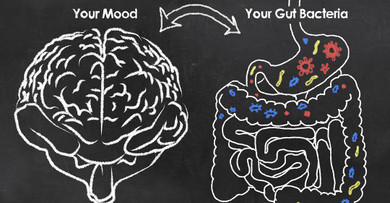
There’s been an explosion of research in the past couple of decades on the relationship between gut microbiota (the 3½-4 pounds of microscopic critters that live inside our intestines, especially the bacteria in our colons) and health. One surprising finding is that these colonic microbes have a considerable influence on our ability to deal with stress and anxiety. New challenges posed by the COVID pandemic have made it all the more important to maintain stress resiliency—the ability to roll with the punches and deal with stress and anxiety in a healthy way. Like most health resources, at Beyond Health we’ve often recommended “stress reduction” practices, like meditation, exercise, and simple things like enjoying music or nature to reduce the impact of stress. But an equally powerful way to increase stress resilience is by making sure you have good bacteria in your colon! There is a complex bi-directional communication system between gut microbiota…

read more
An Introduction to Parkinson’s Disease

Nov 3rd 2025

An Introduction to Parkinson’s Disease

Parkinson’s Disease (PD) is our most common neurodegenerative disease after Alzheimer’s and one of the world’s fastest growing neurological disorders. About a million people had PD in 2017, costing the nation more than $51 billion. It is expected that more than 1.6 million will be living with PD by 2037.Although symptoms and symptom severity vary among individuals, PD generally starts with a tremor in the hands or arms. Other early symptoms include:1) Bradykinesia—slowness of movement in which the patient feels like they’re glued to the ground or chair and it’s hard to get going; this progressively erases body language and facial expression.2) Rigidity—stiffness and jerkiness in movement.3) Posture and balance problems—instability, stooped stance, impaired gait.However PD is a relentlessly progressive disease of neurological deterioration. In its most advanced stage PD is totally disabling. It makes your legs so “frozen” and stiff that it’s impossible to walk or even stand. At this st…

read more
A Five-Arm Treatment Plan for Parkinson’s Disease

Nov 3rd 2025

A Five-Arm Treatment Plan for Parkinson’s Disease

Parkinson’s disease (PD) is a progressive neurological disease second only to Alzheimer’s as a thief of brain cells and quality of life.Although everyone’s PD journey is different in terms of the appearance and intensity of symptoms, and how quickly the disease progresses, the central feature of PD is that brain cells responsible for producing the neurotransmitter dopamine begin to die off. The resulting dopamine deficiency produces PD’s characteristic symptoms, including tremors, rigidity, posture and balance problems, slowed movement and difficulty initiating movement, and non-motor symptoms such as depression, anxiety, fatigue, insomnia and other sleep disorders, cognitive impairment and dementia. Allopathic medicine manages PD motor symptoms by replacing or boosting dopamine production. Most PD patients will need these drugs because by the time PD can be diagnosed, 60-80% of dopamine-producing brain cells are already gone. There is also a surgery called Deep Brain Stimulation that…

read more
Vitamin B6 and Other Levodopa-Related Deficiencies

Nov 3rd 2025

Vitamin B6 and Other Levodopa-Related Deficiencies

Patients living with Parkinson's disease (PD) may be steered toward levodopa to manage symptoms. Presently, levodopa remains the most common PD drug. However, as with many medications, levodopa can create nutrient deficiencies with serious side effects when taken over time, with decreasing amounts of vitamin B6 and vitamin B12 being among the concerns. What Is Parkinson's Disease? PD is a progressive neurological disease in which brain cells that produce the neurotransmitter dopamine gradually die off. Low levels of dopamine cause various movement and non-movement related dysfunctions. The drugs that treat PD either replace or enhance dopamine, and central among these drugs is levodopa. What Is Levodopa? Considered the strongest medication available for managing PD and Parkinson's-like symptoms, levodopa was introduced in the 1960s and is currently classified as a central nervous system agent. Once taken, levodopa is converted into dopamine in your body. It is usually combin…

read more
Do You Enjoy or Dread Exercise?

Nov 3rd 2025

Do You Enjoy or Dread Exercise?

Regular exercise usually increases vitality, but a lot of people just don’t have the energy or motivation to get started on an exercise program. Although different factors can be involved, such as low thyroid, inadequate nutrition, or trying to force yourself into a boring exercise routine, a 2013 study showed that genetics can encourage either a love of movement or for your favorite recliner. Fortunately, there are ways you can compensate for couch potato genes.Rats given running wheels usually put them to good use, but scientists observed that some rats choose to run more than others. They separated high voluntary exercising (HVE) rats from low voluntary exercisers (LVE), and bred them through ten generations to produce final generations of super-HVE and super-LVE rats. The primary differences found between the two groups had to do with genes that control the neurotransmitter dopamine in the brain. The researchers believe that humans have similar genes that make them avid exercisers…

read more

Categories

Tags

Disclaimer

Information contained in NewsClips articles should not be construed as personal medical advice or instruction. These statements have not been evaluated by the Food and Drug Administration. Products are not intended to diagnose, treat, cure or prevent any disease.