null G-5DLXE7JB0V

Your Cart

Your cart is empty

Continue shopping
Skip to main content

Nov 3rd 2025

Slash Your Risk of a Sudden Heart Attack Death

. . . it's not that hard to virtually eliminate the risk! Sudden cardiac death (SCD) is the largest cause of natural death in the US. Most people who die from a sudden heart attack never realized they were at risk, especially women. But by taking care of the fundamentals, you can bring your risk of SCD down to virtually zero! A recent study published in JAMA analyzed data from the Nurses' Health Study, which followed 81,000 women over a 26-year period to see how four healthy lifestyle factors affected risk for SCD. Although only women were involved, the findings would apply to men as well. 1. Not smoking - reduced risk by 75% 2. A Body Mass Index of less than 25 - reduced risk by 56% 3. Exercising at least 30 minutes a day - reduced risk by 72% 4. Following a Mediterranean-type diet, emphasizing high intake of vegetables, fruits, nuts, legumes, whole grains and fish, along with moderate alcohol consumption - reduced risk by 40% All four factors combined reduced the…

read more

Posted by -Beyond Health on Nov 3rd 2025

Rheumatoid Arthritis Increasing...D deficiency a factor

Vitamin D Deficiency and the Rising Risk of Rheumatoid Arthritis in Women Recent research from the Mayo Clinic has identified a concerning trend: rheumatoid arthritis (RA) is increasing among Caucasian women, and vitamin D deficiency appears to be a significant contributing factor. While rheumatoid arthritis is a complex autoimmune condition influenced by genetics, lifestyle, and environmental factors, researchers noted that the most plausible explanation for the rising incidence is the increasing prevalence of vitamin D deficiency, particularly among women. Why Vitamin D Matters in Rheumatoid Arthritis Vitamin D plays a critical role in: Immune system regulation Inflammation control Bone and joint health Low vitamin D levels have been associated with increased autoimmune activity, which may help explain its link to rheumatoid arthritis. As vitamin D deficiency has become more common—due to indoor lifestyles, sun avoidance, and inadequate dietary intake—rates of im…

read more

Nov 3rd 2025

Understanding Secondhand Smoke - Harming Hearing Risks

We all know that smoking is unhealthy and that secondhand smoke is harmful. However, did you know it can harm your hearing? A surprising new study from the U.S. Department of Tobacco Control has concluded that nonsmokers exposed to secondhand smoke are 14 percent more likely to suffer hearing loss in the low to midfrequency range. The mechanism by which the hearing loss happens is not fully understood. Previous studies have also found an association between smoking and hearing loss.…

Exploring Fish Oil and Nicotine Addiction Benefits

Nov 3rd 2025

Exploring Fish Oil and Nicotine Addiction Benefits

We’ve been singing the praises of fish oil for years now. That’s because fish oil provides certain fats that are sorely lacking in the average diet: the omega-3 fatty acids EPA and DHA. In fact, if you’re not going out of your way to get omega-3 fatty acids, you are almost certainly not getting enough. Our bodies synthesize about one trillion new cells every day. Each cell requires the right kinds of fats for its cell membrane. If you aren’t getting enough omega-3s in your diet, you are creating malfunctioning cell membranes and hence malfunctioning cells. Over time, this will have disastrous effects, especially in the brain (which is mostly fat) and nervous system. Now it seems that fish oil may take some of the pain out of nicotine withdrawal. Israeli researchers asked 48 smokers who were not trying to quit to take capsules containing 2,710 milligrams of EPA and 2,040 milligrams of DHA daily or a placebo for one month. At the end of the month, nicotine cravings were down sub…

read more
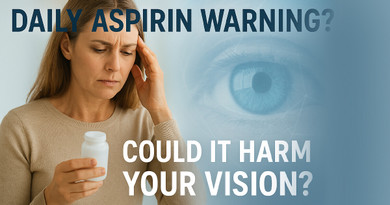
Why Daily Aspirin Use Could Increase Your Risk of Vision Loss

Posted by * on Jul 2nd 2025

Why Daily Aspirin Use Could Increase Your Risk of Vision Loss

. . . it could double your risk for macular degeneration A European study on nearly 4,700 men and women over 65 found that daily aspirin users more than doubled their risk of late stage, "wet" macular degeneration. Age-related macular degeneration is the leading cause of legal blindness resulting in loss of independence among older Americans. The macula is a tiny, highly sensitive region in the center of the retina that allows you to see fine details and colors. Without it, you aren't totally blind, but all you see is shapes and movement in shades of black and white. With age, the macula can deteriorate in one of two ways. It can become thin and sprinkled with debris called drusen (the dry form), or blood vessels beneath the retina may push up into the macula and leak blood and fluids (the wet form). The wet form, which is considered the more serious, was the form associated with aspirin use in the above study. (Aspirin is known to cause small hemorrhages under the retina.) Other…

read more

Categories

Tags

Disclaimer

Information contained in NewsClips articles should not be construed as personal medical advice or instruction. These statements have not been evaluated by the Food and Drug Administration. Products are not intended to diagnose, treat, cure or prevent any disease.