 . . . green tea is one of many sources of antioxidants
A study recently published in the
American Journal of Clinical Nutrition followed almost 14,000 Japanese men and women aged 65 and older for three years and found that the more green tea they drank, the less disability they incurred. Those drinking 1-2 cups a day had a 10% lower risk of disability than those who drank less than a cup a day. Those who drank 3-4 cups a day had a 25% reduced risk, and those who drank 5 cups or more a day had a 33% reduced risk. Since previous studies had found green tea consumption associated with reduced risk of stroke, dementia, fracture and depression, all of which are associated with higher risk for disability, these results weren’t surprising.
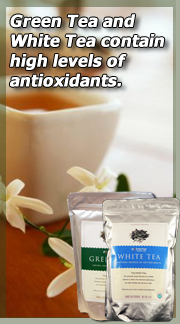
The primary reason green tea is so beneficial to health is that it contains high levels of antioxidant polyphenols. Our green tea contains 200 mg of these antioxidant polyphenols per cup compared with most green tea, which averages just 60 mg per cup. In most of the studies that have been done on the health benefits of drinking green tea, best results come from drinking 3-6 cups a day. But since our green tea is so high in polyphenols, you can get similar benefits from just 1-2 cups a day. Our white tea, a close relative of green tea, contains even MORE antioxidant polyphenols than our green tea.
But while green tea is a wonderful source, antioxidants are available from many sources. It’s best to include a variety of sources in your diet and supplement program because different types of antioxidants serve different functions.
Fruits and vegetables provide antioxidants – one of the main reasons a diet high in fresh
fruits and vegetables is so often correlated with reduced disease risk and good health. We recommend getting 2-3 fruits a day and 9-10 vegetable servings. Herbs like
curcumin,
oregano and
garlic, like
green tea, are especially rich in antioxidants. Raw seeds and nuts provide the antioxidant vitamin E.
Vitamin C is our suggested mainstay for an antioxidant supplement program, along with adequate amounts of the vitamins A, D, E and K, and minerals such as copper, manganese, magnesium, selenium and zinc. Our Cell Repair Formula works synergistically with
vitamins C and
E as an antioxidant and regenerates them so that they can be utilized again and again.
Cell Detox Formula,
Thiodox and
MSM supply precursors for the body’s production of glutathione, a crucial antioxidant used in multiple ways. And see the next article about a new product we’re very excited to introduce:
Age Defense Formula.
As described more fully in this month’s eZine, antioxidants are the key to extinguishing the fires of chronic inflammation – a major factor in every chronic disease, from arthritis to cancer to diabetes to osteoporosis to heart disease to allergies. However you can have chronic inflammation long before you get any of these diseases. It can exist without any symptoms at all, although usually you’ll develop vague symptoms, like fatigue, weak immunity, or a sense of general malaise. The sad fact is that most people today have chronic inflammation to one degree or another.
But it doesn’t need to be that way! All you need to prevent and reverse chronic inflammation is a good diet, a healthy lifestyle, a high-quality supplement program (like one of our
Wellness Kits), and lots of a variety of different kinds of antioxidants. See my articles,
“How We Get Sick” and “
Inflammation: A Common Denominator of Disease” for more.
Tomata Y. Green tea consumption and the risk of incident functional disability in elderly Japanese: the Ohsaki Cohort 2006 Study. The American Journal of Clinical Nutrition. March 2012. Available online at http://ajcn.nutrition.org/content/early/2012/01/24/ajcn.111.023200.full.pdf+html. Accessed February 20. 2013.