. . .
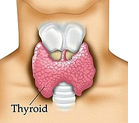
many cases of hypothyroidism go undiagnosed
You’re troubled with fatigue, cold hands and feet, headaches, dry and rough skin, hair loss, and to top it all off, you’re overweight but the scale refuses to budge no matter how much you cut back on the calories. Someone suggests you might be hypothyroid, so you go to your doctor. Your doctor gives you “the test” and later reports that the results are normal.
But if you have several of the above symptoms, or others like edema, muscle aches, decreased libido, poor concentration, poor digestion, insomnia, memory loss, hoarseness and/or anxiety or depression, don’t accept this verdict as final! You may have “subclinical hypothyroidism,” a hypothyroid condition that may not be detected by the usual lab tests. Yet according to a recent article in the
Archives of Internal Medicine, subclinical hypothyroidism is a significant risk factor for heart disease. Other problems associated with subclinical hypothyroidism (and regular hypothyroidism) are high cholesterol and homocysteine levels, infertility, dementia, lowered immunity and increased allergies, and possibly cancer. In short, whether it shows up in tests or not, without adequate thyroid hormone, nothing in your body functions as it should.
The standard test given to determine hypothyroidism is the TSH blood test, and it is often

misleading. TSH stands for thyroid stimulating hormone. When the body’s level of thyroid hormone (T4) is low, the pituitary gland secretes TSH to tell your thyroid gland to produce more T4. So in theory a high TSH should indicate that hormone production is low, and that you are hypothyroid. But there are various reasons that TSH can fail to be an accurate indicator.
Also, as John Dommisse, MD, points out, although the definition of “high TSH” has changed considerably over the years, many doctors and testing laboratories continue to use older definitions. The National Academy of Clinical Biochemistry defined the recommended range for TSH as 0.3-2.5 more than ten years ago, but many labs and physicians still don’t consider TSH high unless it’s over 5.0.
Dr. Dommisse and some other thyroid specialists believe testing free T4 and free T3 is much more telling. Although the thyroid gland produces T4 primarily, T4 is mainly a storage form of the active thyroid hormone T3. Many people have trouble converting T4 into T3, so their T4 and TSH levels may be just fine, but they feel terrible because they’re not getting the “juice” (the T3) they need to function properly.
Other thyroid specialists, like Alan Gaby, MD, give trial doses of natural hormone (which contains both T4 and T3) to patients whose history and symptoms indicate hypothyroidism regardless of specific test results, and determines amounts given by carefully monitoring how his patients feel.
It may take a bit of work to find an alternative healthcare practitioner who has a sophisticated grasp of all that’s involved in thyroid issues, but it’s important to do so and to address hypothyroidism if you have it. You cannot achieve optimal health without adequate “fuel” from your thyroid.
However, as with any health problem, cellular malfunction caused by deficiency and toxicity is always the root cause. If your thyroid is not functioning properly, it is because cells are malfunctioning due to deficiency and toxicity. Thyroid malfunction is often caused by iodine deficiency. You need to check your iodine levels. Other nutrients required to support proper thyroid function include tyrosine, selenium, copper, zinc, magnesium, B vitamins, and vitamins C, D, and E.
Toxins, such as the heavy metals lead and mercury, also disable thyroid function. The same goes for the chlorine and the fluoride in our drinking water. Persistent organic pollutants, such as PCBs, dioxins, and even pharmaceutical drugs, will interfere with thyroid function.
The best solution to any health problem is to get well and stay well by giving your cells everything they need to function properly and keeping them free of toxins that can interfere with their normal function. If you do this, your thyroid will thank you with normal function.
Razvi S. Levothyroxine treatment of subclinical hypothyroidism, fatal and nonfatal cardiovascular events, and mortality. Archives of Internal Medicine. May 2012; 172(10):811-817.
Dommisse J. Best kept secret: A successful approach to underactive thyroid hormone function. Wise Traditions. Summer 2009:26-36.
Gabby A. "Sub-laboratory" hypothyroidism and the empircal use of Armour® thyroid. Alternative Medicine Review. 2004; 9(2):26-36.