null G-5DLXE7JB0V

Your Cart

Your cart is empty

Continue shopping
Skip to main content
Discover the “Miracle Cure” for Depression Suppressed

Posted by -Beyond Health on Nov 3rd 2025

Discover the “Miracle Cure” for Depression Suppressed

A Vitamin B12 Story: Extraordinary Healing—and Institutional Resistance This is a good-news/bad-news story. The Good News As reported by investigative journalist Lynne McTaggart in The Optimist, a physician in England—originally from India—has spent more than forty years quietly achieving what most consider impossible. Joseph Chandy became widely known for reversing severe depression in hundreds of patients—and, remarkably, for producing dramatic improvements in patients with multiple sclerosis and chronic fatigue syndrome. In a 2006 BBC segment, former MS patients described standing up from wheelchairs after treatment. His “miraculous” therapy? Vitamin B12 injections. Why This Worked Dr. Chandy recognized something foundational early in his career:one of the two true causes of disease is nutrient deficiency. As Raymond Francis wrote as far back as 2003: Proper nutrition is the single most important factor in preventing and reversing depression. F…

read more

Posted by - Beyond Health on Nov 3rd 2025

Big Pharma Pays Billions in Fines for Fraud Yearly

$3 Billion… and the Stock Price Went Up When GlaxoSmithKline (GSK) paid a record $3 billion to settle violations of the False Claims Act including concealing data about fatal cardiovascular risks linked to its diabetes drug Avandia you might expect outrage. Or at least financial consequences. Instead? The company’s stock price rose to near a 52-week high. Investors understood something sobering: Even billion-dollar fines are simply absorbed as a cost of doing business. The Numbers Tell a Disturbing Story According to the U.S. Department of Justice, the pharmaceutical industry is the largest defrauder of the federal government under the False Claims Act measured by total settlement amounts. Consumer advocacy group Public Citizen tracked the escalation: 1991–2010: Nearly $20 billion in fines Nov 2010–mid 2012: $10 billion more First half of 2012 alone: $6.6 billion Fines aren’t slowing misconduct. They’re scaling alongside profits. When penal…

read more
Uncovering the Truth Behind Death by Calcium!

Posted by -Beyond Health on Nov 3rd 2025

Uncovering the Truth Behind Death by Calcium!

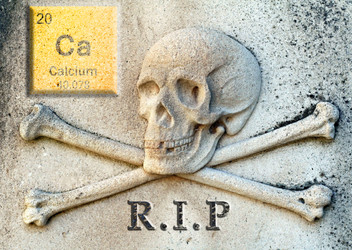
Calcium: From “Magic Bullet” to Scapegoat—and Back to Science Once celebrated as the superstar solution for osteoporosis, calcium has recently fallen from grace. It’s now routinely criticized—or outright vilified—by both conventional and alternative health commentators. Vitamin C researcher Thomas E. Levy, MD, even titled a book Death by Calcium! So how did one of the most essential minerals in human physiology—and one that most Americans, especially the elderly, are deficient in—end up with such a bad reputation? How Calcium Lost Its Halo The calcium controversy began when it was promoted as a standalone “magic bullet” for osteoporosis. The logic was simple: Weak bones? Take more calcium. When that approach didn’t deliver the expected results, experts added vitamin D: Take calcium with vitamin D. This worked slightly better—but still not well enough. Why? Because calcium never works alone. Calcium Is a Team…

read more
Understanding Prostate Problems — Inevitable or Not?

Posted by -Beyond Health on Nov 3rd 2025

Understanding Prostate Problems — Inevitable or Not?

Benign Prostatic Hyperplasia (BPH): Inevitable—or Preventable? By age 80, approximately 90% of men have an enlarged prostate, medically referred to as benign prostatic hyperplasia (BPH). In conventional medicine, BPH is now widely regarded as an almost inevitable consequence of aging. At Beyond Health, we don’t accept inevitability as destiny. Understanding BPH and Its Risks The prostate gland surrounds the urethra. As it enlarges, it can compress the urethral channel, leading to lower urinary tract symptoms (LUTS) that range from mildly annoying to severely debilitating. Common symptoms include: Weak or interrupted urine stream Difficulty starting or stopping urination A feeling of incomplete bladder emptying Dribbling Frequent urination, especially at night Urgency or sudden need to urinate Burning or pain during urination Over time, irritation and damage to the urethral lining can increase the risk of urinary tract infections. If left unaddressed, progre…

read more
The Most Miraculous Molecule You Can Put into Your Body

Posted by -Beyond Health on Nov 3rd 2025

The Most Miraculous Molecule You Can Put into Your Body

Vitamin C: The Molecule That Changed Everything Ever since it saved his life, Raymond Francis has regarded vitamin C—when it’s the right kind—as the most powerful and indispensable nutrient for human health. Long before Beyond Health existed, Raymond wasn’t planning for the future. In truth, he wasn’t sure he had one. He was gravely ill—near death—when he called his brother Bernie, who flew across the country expecting the worst. What Bernie found was alarming. Raymond was emaciated, barely conscious, and drifting in and out of awareness. What happened next would change everything. Bernie had brought a book he’d recently heard about: Anatomy of an Illness by Norman Cousins. Cousins is best known for using laughter to help reverse a supposedly incurable disease—but less well known is that high-dose vitamin C, administered intravenously, was a cornerstone of his recovery. Too weak and discouraged to laugh, Raymond was willing to try w…

read more

Posted by - Beyond Health on Nov 3rd 2025

Organics – Worth the Price?

The Headlines Say “No Difference.” Your Cells Say Otherwise. You may have seen the headlines: A Stanford review of nearly 300 studies found no meaningful nutritional difference between organic and conventional foods. If you care about clean eating, that message feels confusing maybe even discouraging. So let’s step back and ask a better question: Is food just about vitamin counts on a spreadsheet?Or is it about nutrient density and toxic exposure? Because those are not the same thing. What the Stanford Study Actually Looked At The review focused primarily on: Measurable nutrient levels Documented bacterial contamination Certain pesticide residues It concluded that, on average, organic foods were not dramatically higher in vitamins and minerals. But here’s what matters: Health is not built on averages. It is built on cellular biology. And cellular biology is profoundly affected by toxic load. Nutrients Are Only Half the Story Even if nutrient differences…

read more
Removing Genetically-Modified Food Helps Many Health Problems

Posted by -Beyond Health on Nov 3rd 2025

Removing Genetically-Modified Food Helps Many Health Problems

GMO Foods, Gut Health, and the Hidden Pathway to Chronic Illness Since the publication of his best-selling book Seeds of Deception: Exposing Industry and Government Lies about the Safety of the Genetically Engineered Foods You’re Eating, Jeffrey M. Smith has emerged as one of the most prominent voices calling for a global reassessment—and potential halt—of genetically engineered (GE) food technology. Through his organization, the Institute for Responsible Technology (IRT), Smith has documented thousands of anecdotal reports from individuals whose health improved after eliminating genetically modified (GM) foods from their diets, often on the recommendation of their healthcare providers. Some people reported improvements within days; for others, benefits unfolded gradually over four to six weeks. Reported Health Improvements After Removing GM Foods To date, more than 3,000 individuals have reported improvement in 28 different conditions, including: Digestive disorde…

read more

Nov 3rd 2025

Wash Your Hands – but Not with Antibacterial Soap!

. . . there are problems with antibacterials, and regular soap protects you just as well Frequent hand washing is one good way for you and your kids to prevent winter colds and flu, but antibacterial soaps do nothing more than regular soaps to protect you, while antibacterial chemicals can raise havoc both in the human body and in our environment. According to a 2008 Environmental Working Group (EWG) report, both the American Medical Association and a Food and Drug Administration (FDA) advisory committee, along with “dozens of academic researchers” concluded that antimicrobial soaps don’t work any better than plain soap and water at preventing the spread of infections. But while antibacterials, the most common and most studied being triclosan, don’t offer any additional protection, they do provide additional risk. Triclosan is known to be toxic to bacteria, algae and fish. I think you can be virtually certain it is also toxic to humans. Animal studies suggest that triclosan is…

read more
Dealing with Anxiety with Mental Imagery

Posted by -Beyond Health on Nov 3rd 2025

Dealing with Anxiety with Mental Imagery

Finding Calm Through Mental Imagery in an Anxiety-Filled World Mental imagery—the practice of allowing images or a subtle “felt sense” to arise from the subconscious—has been used across cultures and throughout human history as a way to access insight, wisdom, and healing. It has helped people solve problems, understand emotional patterns, and restore inner balance. I’d like to share a recent experience with mental imagery as an invitation for you to explore it yourself—especially in the context of our anxiety-laden COVID-19 world. It does take some time and patience to learn, but in my experience, the rewards can be profound. Entering the Inner Landscape To better understand a background feeling of anxiety that had been present since the start of the pandemic, I set a timer for 20 minutes and sat cross-legged on a cushion in my living room. With my eyes closed, I focused on my breath, allowing it to settle me into stillness and bring my awareness f…

read more
Deadly Legionnaires’ Disease in Your Tap Water

Nov 3rd 2025

Deadly Legionnaires’ Disease in Your Tap Water

There are dangerous chemicals lurking in your tap water. Chlorine, fluoride, nitrates, heavy metals, microorganisms, radiation—these and  thousands of other toxins come to us courtesy of our own government, landfill and agricultural runoff, industrial chemicals, nuclear disasters…to name a few. Now, one familiar toxin is making headlines across the country again. A new study by the U.S. Environmental Protection Agency (EPA) indicates an alarming number of water taps contain the live bacterium Legionella pneumophila. Chemist Maura Donohue and colleagues at the EPA collected over 274 samples from 68 public and private water taps across the U.S. They found that nearly half of all taps—including kitchen and bathroom sinks, drinking fountains, and refrigerator dispensers— contained traces of L. pneumophila in at least one sample. Even worse, 11 of those contained the bacterium in multiple samples! What are my chances of getting Legionnaires’ disease? Legionella pneumophila…

read more
Is Alzheimer’s a Women’s Disease?

Nov 3rd 2025

Is Alzheimer’s a Women’s Disease?

The toll of Alzheimer’s disease (AD) on our nation is enormous and growing.Roughly 5 million American seniors age 65 and older are living with AD and that number climbs to around 16.5 million (about 1 in 3) for those 85 and older. Worse, Alzheimer’s cases are expected to more than triple by 2050. Alzheimer’s disease is a result of progressive brain cell death, causing memory loss and cognitive decline. While physically debilitating, an even bigger threat is the accumulated stress AD places on the finances, relationships, and independence of its victims and their families. New evidence also shows that women may be bearing the brunt of this debilitating condition. The burden of Alzheimer’s and its impact on women According to a new report released last month from the Alzheimer’s Association, AD takes a disproportionate toll on women more than men. In 2010, the Alzheimer’s Association partnered with Maria Shriver and The Shriver Report to conduct a groundbreaking poll explorin…

read more
Women Get Short-Changed on Bladder Cancer Testing

Nov 3rd 2025

Women Get Short-Changed on Bladder Cancer Testing

Seeing blood in your urine (doctors call it “hematuria”) can mean different things. Most often in women it’s due to a urinary tract infection. But it can also be caused by kidney stones, bladder stones, or, in men, a prostate infection. And, according to an article in the Johns Hopkins newsletter, Health After 50, 10% of those who report blood in their urine have bladder cancer. This is especially true after the age of 55. But doctors seem to be dragging their heels in referring women with hematuria to a urologist to be tested for bladder cancer compared with men. This was found in Great Britain in a study published in 2013 in the British Medical Journal.  In 2008, similar results were found here in the US. In the British study, 27% of the women reviewed had to see their doctor three or more times before being referred to a urologist compared with 11% of the men, even though clinical guidelines in England say patients with hematuria should be “referred urgently” to a urologist. I…

read more
Vitamin D Helps Women Survive Breast Cancer

Nov 3rd 2025

Vitamin D Helps Women Survive Breast Cancer

Vitamin D continues to impress as an important protective nutrient. Previous research linked this amazing nutrient to reduced risk of heart disease, bone fractures, depression, and more. Now, a research team at the University of California, San Diego School of Medicine has confirmed the important role vitamin D plays in helping women survive breast cancer. Vitamin D doubles a woman’s chances of surviving breast cancer Led by Professor Cedric F. Garland, the team analyzed five separate studies investigating the presence of the activated form of vitamin D (25-hydroxyvitamin D or 25(OH)D) in the blood. The research included data from 4,443 breast cancer patients who had their blood levels tested upon diagnosis and at periodic intervals over the following nine years. Then researchers compared women with high blood serum levels of 25(OH)D averaging 30 nanograms per milliliter (ng/ml) or more to those with low levels of 17 ng/ml or less, which is the current average for breast cance…

read more
Stents Don’t Prevent Heart Attacks

Nov 3rd 2025

Stents Don’t Prevent Heart Attacks

According to a recent article in the New York Times, each year more than half a million Americans get a metal mesh tube called a stent inserted into a clogged artery to push back arterial plaque, allowing for better blood flow. A stent can save your life during a heart attack, but it will not prevent a future attack. Yet nine out of ten patients who choose to have stents inserted believe that they do. And, despite the evidence, many cardiologists share this mistaken belief and recommend stents for patients with stable heart disease. In an editorial written for the American Heart Association journal, Circulation: Cardiovascular Quality and Outcomes, Michael B. Rothberg, MD, MPH, of the Cleveland Clinic, explains that the belief that stents prevent heart attacks is based on an outmoded picture of coronary artery disease as the slow build-up of arterial plaque until it comes to completely block an artery. “Although the image of coronary arteries as kitchen pipes clogged with fat is sim…

read more
FDA Says Aspirin DOESN’T Prevent Heart Attacks

Nov 3rd 2025

FDA Says Aspirin DOESN’T Prevent Heart Attacks

Big Pharma has been padding their profits by selling drugs for “disease prevention.” For example, the very successful campaign to get everyone on a daily “baby aspirin” to prevent having a heart attack or a stroke. Taking a daily baby aspirin, which is ¼ the dose of a regular aspirin, is known as “low-dose aspirin therapy.” Although there is evidence that low-dose aspirin therapy can help prevent a second heart attack or stroke, major studies have confirmed that it does NOT prevent first heart attacks or strokes in people who have no history of heart disease, even when they are at high risk due to family history and other factors like having diabetes. What low-dose aspirin therapy does do is increase the risk of bleeding events by about 30%! Internal bleeding is serious business; you can die from it and thousands do yearly. Despite its cozy relationship with industry, the United States Food and Drug Administration (FDA) has had to bow to the evidence and recently denied a reques…

read more
Blood Pressure Meds Boost Risk of Serious Falls in Seniors

Nov 3rd 2025

Blood Pressure Meds Boost Risk of Serious Falls in Seniors

According to the US Centers for Disease Control (CDC), 67 million adults have high blood pressure. Yet many don’t know it. Because high blood pressure, or hypertension, has no warning signs, earning it the title “America’s silent killer.” That means 1 in 3 adults—maybe even you—are at an increased risk of suffering a fatal heart attack or stroke, two of the leading causes of death in the United States. If you have hypertension, your doctor has likely prescribed one or more of the dozens of medications designed to lower your blood pressure...but there’s a big problem with that. Prescription drugs are toxins that are specifically designed to poison one part of the body in order to suppress a symptom in another part of the body. Poisoning the body causes entirely new diseases, but to obscure this fact, the new diseases are called "side effects." Anti-hypertensive medications cause significant side effects, including dizziness and fainting, which is particularly dangerous for aging…

read more
Stop the Attack on Your Supplement Freedom!

Nov 3rd 2025

Stop the Attack on Your Supplement Freedom!

Your Urgent Attention Required  **UPDATE: Deadline has been EXTENDED! You now have until August 1 to comment on the proposed changes to supplement labeling regulations.** Dear Health Enthusiast, A dangerous situation that greatly impacts vital nutrient intake is at hand, and your action is urgently needed to prevent it! As founder and president of Beyond Health, it is my personal and professional goal to be a vital health resource to you and your family. This is why I’d like to bring your attention to recent FDA developments proposing revisions to supplement labeling and nutritional potency that are threatening your freedom to obtain the supplements you need to get healthy and stay healthy. In February 2014, Food and Drug Administration (FDA) Commissioner Dr. Margaret Hamburg announced the first major change to nutrition and supplement labeling in 20 years. A large number of formatting and placement changes will be made to the current Nutrition Facts panel on food labels a…

read more
Mammograms Don’t Save Lives

Nov 3rd 2025

Mammograms Don’t Save Lives

A huge new study from Canada that followed about 90,000 women for almost 25 years has told us what we already knew: mammograms don’t save lives. Raymond Francis has been arguing for more than two decades that not only do mammograms not save lives, ionizing radiation, as found in mammograms, is one of the things that we know for certain causes cancer. Chest X-rays are known to increase the risk of cancer, and mammograms expose your body to 1,000 times more radiation than a chest X-ray. Before you get a mammogram, please read his article, Mammograms Are a Bust. In the new study, 15 different screening centers throughout Canada collaborated in providing 5 yearly mammograms to women ages 40-59. The women were then followed for up to 25 years and compared with similar aged women who had been given only physical breast exams. At the end of the study period 500 of the women who had received mammograms had died of breast cancer compared with 505 of the women who had had breast exams onl…

read more
Sneak Peak at Raymond’s New Book!

Nov 3rd 2025

Sneak Peak at Raymond’s New Book!

It’s been 12 years since Raymond Francis published his groundbreaking book, Never Be Sick Again (NBSA). At this point hundreds of thousands of dog-eared copies of this best seller are being used as trusted references for getting well and staying well. To incorporate all the new information that’s come out in the past decade, it was time for a revised edition. But Raymond wanted to create a new book with a more practical emphasis. The Great American Health Hoax will be available early in 2015. Like NBSA, it indicts the American “disease-care” system that focuses on alleviating symptoms at the expense of supporting the body’s inherent self-healing capacities. And, like NBSA, the new book presents a solution to the problem: Raymond’s one disease-two causes-six pathways model. But The Great American Health Hoax adds the equivalent of an automobile’s maintenance manual. Several “maintenance items” are introduced—health parameters we need to monitor. If they deviate too far f…

read more
A Triage Approach to Nutrition

Nov 3rd 2025

A Triage Approach to Nutrition

Bruce Ames, PhD, is one of our nation’s most distinguished scientists. Professor Emeritus of Biochemistry and Molecular Biology at the University of California, Berkeley, and director of the Nutrition and Metabolism Center at Children’s Hospital Oakland Research Institute, Dr. Ames leads a group of researchers dedicated to the study of how poor nutrition leads to the degenerative diseases associated with aging, with their attendant astronomical costs to our nation. Ames has developed a theory, which he calls his Triage Theory, to explain much of the chronic disease common today in the modern industrialized countries. Whereas gross deficiencies in vitamins and minerals are rare in affluent nations, modest deficiencies are common. Ames reports that most of the world’s population, including in the US, is moderately deficient in one or more of the 30 or so essential vitamins and minerals. Because the damage done by moderate vitamin and mineral deficiencies is insidious, says Ames, it…

read more
The Hidden Hazard in Green Smoothies

Nov 3rd 2025

The Hidden Hazard in Green Smoothies

A credible scientist is worried about the high oxalic acid (aka oxalate) content in green drinks and vegetarian diets.  Should you be concerned?  Maybe. Oxalic acid is found in plant foods. It’s also produced by the body in the course of normal metabolism.  Pretty nasty stuff, it’s the most corrosive acid in the body, a pro-oxidant, and it can combine with most minerals and heavy metals to form oxalate crystals. The most well-known of these crystals are kidney stones, but, according to chemist William Shaw, PhD, formerly of the Centers for Disease Control, high levels of oxalate can form crystals just about anywhere in the body, including glands, heart and brain. Like tiny pieces of glass, these crystals cause tissue damage and inflammation and have been implicated in arthritis, fibromyalgia, interstitial cystitis and a painful condition in and around the vagina called vulvodynia. Fortunately the human body is well-equipped to dispose of oxalate. If you’re in go…

read more

Categories

Tags

Disclaimer

Information contained in NewsClips articles should not be construed as personal medical advice or instruction. These statements have not been evaluated by the Food and Drug Administration. Products are not intended to diagnose, treat, cure or prevent any disease.