5 Common Immune Support Mistakes and What to Do Instead
Most people start thinking about their immune system the day they feel a scratchy throat.
By then, the habits that matter most have already been at work for weeks.
Your immune system depends on steady nutrition, enough sleep, manageable stress and daily routines. A supplement taken at the last minute can't make up for all of that. Used consistently, though, the right nutrients can help fill real gaps.
Here are five common immune support mistakes, what the research actually says, and simple ways to correct course.
Mistake #1: Overlooking the Nutrients Your Immune System Relies On
Immune cells are some of the busiest cells in your body. They need a steady supply of nutrients to develop and work normally, including vitamin C, vitamin D, zinc, protein, vitamin A and selenium.
Shortfalls are more common than many people assume. According to the NIH Office of Dietary Supplements, most people in the United States get less vitamin D from food than recommended, and sunlight becomes a weaker source in fall and winter.
What to do instead
- Build meals around whole foods: colorful produce, quality protein, beans, nuts and seeds.
- Know where you stand: a simple blood test can show your vitamin D level.
- Fill specific gaps with supplements rather than guessing or taking everything at once.
Mistake #2: Relying on Sugary Drinks and Nutrient-Poor Foods
You may have heard that sugar "shuts down" your immune system. That claim goes further than the evidence.
The more practical problem is what sugary drinks and heavily processed foods replace. Every soda, sweetened coffee drink or packaged snack takes the place of foods that supply vitamins, minerals, fiber and protein. Over time, diets high in added sugar are also linked with weight gain and poorer blood sugar control, which affect overall health.
We covered the latest research on this in Sugary Drinks and Stomach Cancer Risk: What New Research Found.
What to do instead
- Swap one sugary drink a day for water, sparkling water or unsweetened tea.
- Add a fruit or vegetable to every meal.
- Keep simple, nutrient-dense snacks on hand, such as nuts, eggs or plain yogurt.
Mistake #3: Treating Sleep as Optional
Sleep is when your body does much of its repair and immune regulation work.
In a well-known study published in the journal Sleep, researchers tracked adults' sleep and then exposed them to a common cold virus. People who slept less than six hours a night were considerably more likely to develop a cold than those who slept more than seven hours. The study shows an association, not proof of cause, but it fits a broader body of research linking short sleep with weaker immune responses.
The CDC recommends that adults get at least seven hours of sleep per night.
What to do instead
- Keep a consistent bedtime and wake time, even on weekends.
- Dim screens and bright lights in the hour before bed.
- Get daylight early in the day to help set your internal clock.
If you sleep enough but still wake up drained, read Why Am I Still Tired After 8 Hours of Sleep? 7 Possible Reasons.
Mistake #4: Letting Chronic Stress and Poor Recovery Build Up
Short bursts of stress are a normal part of life. Long-running stress is different.
Research led by psychologist Sheldon Cohen found that people reporting higher psychological stress were more likely to develop colds after exposure to cold viruses. Chronic stress also tends to cut into sleep, appetite and exercise, compounding the problem.
What to do instead
- Move most days. Regular, moderate activity supports overall health. See Why Strength Training Matters as You Age.
- Schedule recovery the same way you schedule work: walks, time outdoors and time with people you enjoy.
- Don't add to the load with alcohol or late-night screen time when you're already run down.
Mistake #5: Only Paying Attention When You Feel Sick
This may be the most common mistake of all.
Research on vitamin C illustrates the point. A Cochrane review summarized by the NIH found that taking vitamin C regularly modestly shortened colds, while starting it after symptoms began did not show a consistent benefit.
The same principle applies to sleep, stress and diet. Your immune system responds to what you do every day, not just what you do on the worst day.
What to do instead
- Pick two or three habits from this article and do them daily.
- If you take supplements, take them consistently with meals.
- Reassess every few months, especially as seasons change.
How Vitamin C, Vitamin D3, Zinc and Quercetin Fit Into an Immune-Support Routine
Before looking at individual nutrients, one distinction matters:
Getting enough of a nutrient supports normal immune function. Taking more than you need does not necessarily add extra protection. The strongest evidence for supplements usually comes from people who were low to begin with.
Vitamin C
Vitamin C is used by several types of immune cells and is one of the body's main water-soluble antioxidants. The recommended intake is 75 mg a day for women and 90 mg for men, and the upper limit for adults is 2,000 mg a day. High doses can cause digestive upset.
Beyond Health Vitamin C Buffered Tablets provide 1,000 mg per tablet from calcium and magnesium ascorbates, a non-acidic form many people find gentler on the stomach.
Vitamin D3
Vitamin D helps regulate immune function and supports bone and muscle health. An analysis of 25 clinical trials in The BMJ found vitamin D supplementation modestly reduced acute respiratory infections overall, with the clearest benefit in people who had low vitamin D levels.
The recommended intake for most adults is 600 to 800 IU a day, and the NIH upper limit is 4,000 IU a day. Higher-dose products, such as our Vitamin D3 5,000 IU softgels, are best used with periodic blood testing and guidance from your healthcare provider so you can reach and maintain a healthy level without overshooting.
Zinc
Zinc is a mineral immune cells need to develop and function normally. The recommended intake is 8 mg a day for women and 11 mg for men, and the adult upper limit is 40 mg a day from all sources. Long-term intake of 50 mg or more can interfere with copper absorption, so more is not better.
Beyond Health Zinc provides 25 mg per capsule from zinc picolinate and zinc citrate, along with vitamin B6. If you also take a multivitamin, check its zinc content too.
Quercetin
Quercetin is a flavonoid found in onions, apples, berries and capers. It has antioxidant properties and has been studied for its effects on immune and inflammatory signaling, mostly in laboratory research.
Human evidence is still preliminary. In one 12-week trial, quercetin did not reduce upper respiratory infections overall, though researchers saw fewer sick days in a subgroup of physically fit adults over 40. Think of quercetin as a complementary antioxidant rather than an established immune nutrient like vitamin C, vitamin D or zinc.
Beyond Health Quercetin Pro provides 250 mg of quercetin with 250 mg of rutin and grape extract per capsule.
For more on how antioxidants work, read The Power of Antioxidants: How They Help Protect Your Cells.
Your Practical Immune-Health Checklist
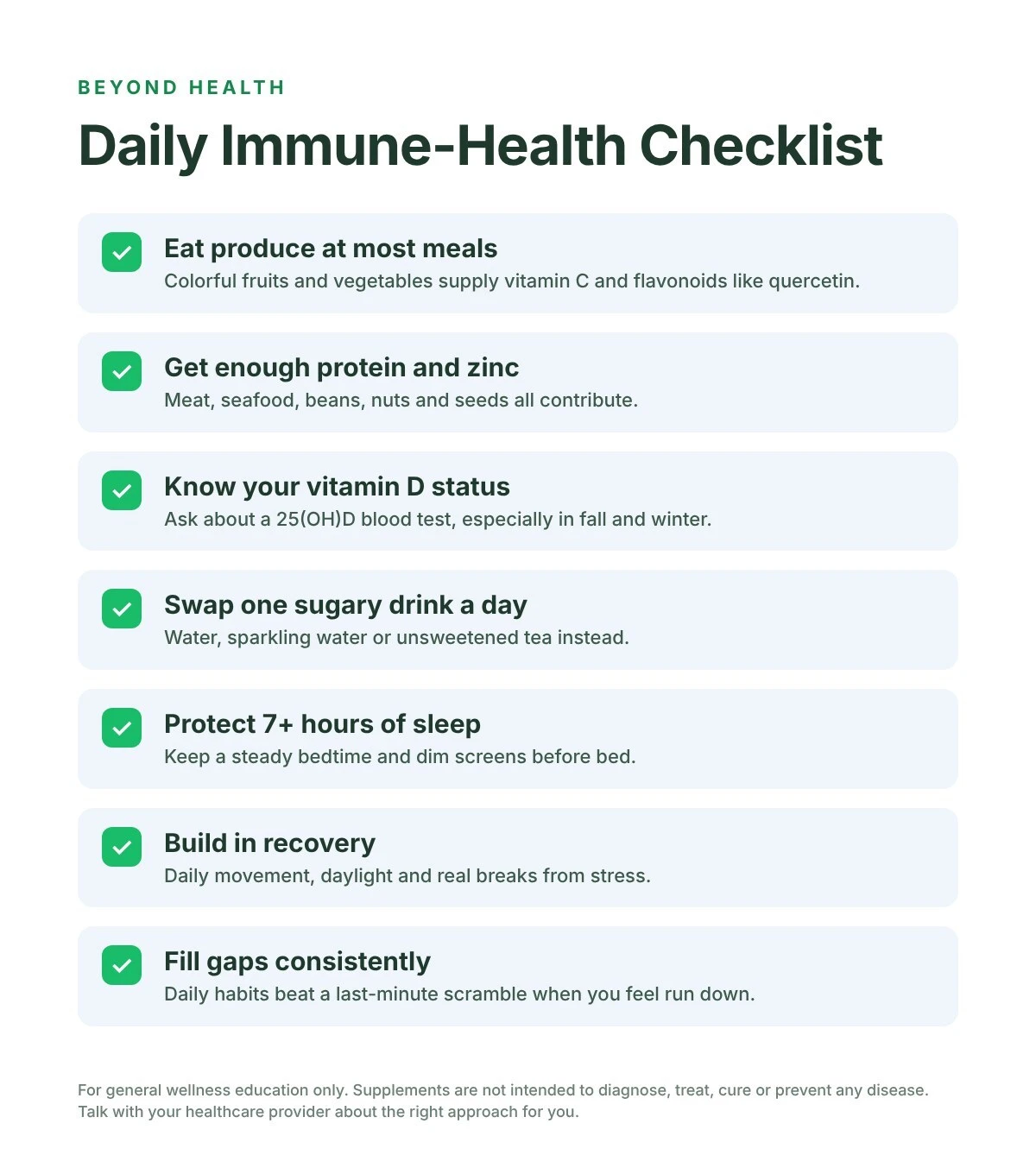
- Eat fruits or vegetables at most meals.
- Include protein and zinc-rich foods daily.
- Ask your provider about checking your vitamin D level.
- Replace at least one sugary drink a day.
- Protect seven or more hours of sleep.
- Build daily movement and recovery into your schedule.
- Take any supplements consistently, and check total doses across products.
Cover the Nutrient Basics in One Step

If you'd like a simple way to round out the nutrient side of your routine, the Beyond Health Immune Builder Bundle brings together Quercetin Pro, Vitamin C, Vitamin D3 and Zinc in one order.
It's designed to work alongside good food, sleep and stress habits, not to replace them.
Shop the Immune Builder Bundle →
The Bottom Line
Strong immune support is built day by day. Eat nutrient-dense food, sleep enough, manage stress and stay consistent. Supplements work best when they fill real gaps in that foundation.
Frequently Asked Questions About Immune Support
Can supplements prevent colds or the flu?
No supplement can guarantee that. Vitamin C, vitamin D and zinc support normal immune function, and research shows the clearest benefits when someone's intake or levels are low. Vaccination, sleep, hand hygiene and a nutritious diet remain important.
Is it safe to take 5,000 IU of vitamin D every day?
5,000 IU is above the NIH upper limit of 4,000 IU a day for adults. Some people with low levels use higher doses under a provider's guidance. The safest approach is to test your vitamin D level and adjust with your healthcare provider.
Can I take vitamin C, vitamin D3, zinc and quercetin together?
These nutrients are commonly taken together with meals. Check your total intake across all products, especially zinc and vitamin D, and talk with your healthcare provider if you take medications such as certain antibiotics, which can interact with zinc.
Can I get these nutrients from food alone?
Many people can get enough vitamin C and zinc from a varied diet. Vitamin D is harder, because few foods contain much of it and sunlight is limited for part of the year.
How long does it take to see results?
Nutrient levels change gradually, and vitamin D levels can take weeks to months to rise. That's why consistency matters more than short bursts.
Sources
- NIH Office of Dietary Supplements: Vitamin C Fact Sheet
- NIH Office of Dietary Supplements: Vitamin D Fact Sheet
- NIH Office of Dietary Supplements: Zinc Fact Sheet
- Martineau et al., Vitamin D supplementation to prevent acute respiratory tract infections, The BMJ (2017)
- Prather et al., Behaviorally Assessed Sleep and Susceptibility to the Common Cold, Sleep (2015)
- CDC: About Sleep
- Cohen et al., Psychological Stress and Susceptibility to the Common Cold, New England Journal of Medicine (1991)
- Heinz et al., Quercetin supplementation and upper respiratory tract infection, Pharmacological Research (2010)
These statements have not been evaluated by the Food and Drug Administration. Beyond Health products are not intended to diagnose, treat, cure or prevent any disease. This article is for general education and is not medical advice. Talk with your healthcare provider before starting supplements, especially if you are pregnant, nursing, take medication or have a medical condition.